
Former Prosecutor
of 20 Years on
Your Side
of 20 Years on
Your Side






An ignition interlock requirement is not a minor add-on in a Missouri intoxication case. It is a court ordered restriction that can control whether a person may drive at all, under what conditions the person may drive, and what happens if the State claims the person violated the rules. Once the government says you failed to comply with ignition interlock requirements, the issue can move far beyond inconvenience. It can affect probation, limited driving privileges, reinstatement, and exposure to new criminal allegations.
That is why these cases need to be taken seriously from the beginning. Many people assume an interlock related allegation is purely administrative. It often is not. Missouri law addresses ignition interlock obligations in several places, including sections 302.309, 302.440, 302.441, 302.442, 302.458, and chapter 577 provisions addressing conduct involving restricted drivers and interlock circumvention. If the court required an interlock, or if the Department of Revenue made it a condition of limited driving privilege or reinstatement, the accused driver can face immediate consequences when compliance is questioned.
Scrivner Law Firm represents clients accused of serious criminal and driving related offenses in southwest Missouri. Dayrell Scrivner’s background as a former prosecutor, including many years in the Stone County Prosecutor’s Office and service as Chief Assistant Prosecuting Attorney, gives him a strong working understanding of how prosecutors and courts handle interlock related allegations after a DWI or BAC case. When the State claims a driver broke the rules, that background can matter.
Missouri law authorizes and in many cases requires ignition interlock use after intoxication related traffic offenses. Under section 302.440, a court may require ignition interlock use after a first intoxication related traffic offense and shall require it after a second or subsequent intoxication related traffic offense. Section 302.442 also requires proof of compliance within the ordered time and allows the court to revoke or terminate probation or a limited driving privilege if proof is not timely provided absent a finding of good cause.
That framework means a driver can face problems even before a new criminal charge is filed. A missed deadline, a disputed compliance report, or a claim that the driver operated a noncompliant vehicle can be treated as a violation of court ordered conditions.
Prosecutors often present ignition interlock cases as deliberate defiance. They may argue the driver had already been given a second chance after a DWI case and then chose not to follow the rules. That framing can be persuasive unless the defense pushes back with detail and context.
Sometimes the allegation involves something much less clear. The driver may have been confused about the scope of the restriction, driving an employer vehicle under a claimed exemption, waiting on installation paperwork, disputing the accuracy of a device report, or dealing with a mechanical problem that the prosecution oversimplifies. Good defense work starts by separating real facts from assumptions.
Ignition interlock cases do not all look the same. Some involve court compliance problems. Others involve new charges.
One of the most common accusations is that a restricted driver operated a vehicle not equipped with a functioning, certified ignition interlock device when the person was legally required to have one. That can arise through a traffic stop, an accident investigation, a probation report, or records produced in a related proceeding.
Section 302.442 gives the court authority to require proof that the device was installed on any vehicle operated by the person. If the person fails to provide proof within the required time, the court may revoke probation or terminate limited driving privileges unless good cause is shown. In other words, even a paperwork or timing issue can become a serious problem if not addressed correctly.
Missouri law also criminalizes tampering with or circumventing the operation of an interlock device. When that accusation is made, the case can turn technical very quickly. The State may rely on records from the vendor, statements from officers or probation personnel, and assumptions about how the device was used. Yet device data does not always tell the full story. A defense lawyer must examine whether the alleged violation truly proves tampering, who had access to the vehicle, what the logs show, and whether the system is being interpreted fairly.
Section 302.441 allows an employment exemption variance in limited circumstances for employer owned vehicles not equipped with an ignition interlock device. But the statute is narrow. It does not apply to self-employed persons or people who own or control the entity that owns the vehicle. These cases can become fact specific very quickly. Was the vehicle truly employer owned? Was the exemption properly granted? Was the driving actually for work purposes only? A rushed conclusion by the State may not reflect the actual record.
Ignition interlock cases often carry an aura of certainty because they involve a device, a compliance report, or a written restriction. But these cases can be more nuanced than they first appear.
Interlock data can be misread, taken out of context, or treated as more conclusive than it really is. A failed sample does not always mean the person had been drinking. A missed rolling retest or startup issue may involve mechanical error, another user, contamination, or operational confusion. The defense should not assume that a vendor report settles the matter.
What exactly was the person ordered to do, and when? Was the device required on all vehicles operated? Was the person under a limited driving privilege? Did the court impose a condition that differed from what the State later claimed? Interlock cases often require a close reading of the court order, the Department of Revenue record, and the timeline of the underlying DWI matter.
Not every interlock issue comes down to a machine. Sometimes a spouse, family member, coworker, probation officer, or employer has relevant information about who drove the vehicle, who had access, or what instructions were given. Context can change how a court views an alleged violation.
A person accused of violating ignition interlock rules may face more than a citation. Depending on the posture of the case, the driver may be exposed to probation violation proceedings, loss of limited driving privilege, delayed reinstatement, or stronger treatment demands from the court. In repeat offender cases, the allegation may also harden the court’s view of the defendant during sentencing or negotiations on other pending matters.
That is one reason people should not treat these accusations casually. Even when the allegation seems technical, the practical consequences can be substantial. A person may lose the ability to commute, maintain employment, care for children, or comply with other court obligations.
Dayrell Scrivner’s experience as a former prosecutor is valuable in interlock related defense because these cases often involve more than straightforward legal arguments. They involve narrative. The State will try to tell the court that the accused was already given one structured opportunity to remain on the road and then chose not to follow the rules. A strong defense needs to answer that story with facts, law, and credibility.
That may mean showing the device data is not as clear as claimed, the person acted in good faith, the order itself was narrower than the prosecution suggests, or the alleged violation is being exaggerated to gain leverage. It may also mean addressing a probation or compliance problem before it becomes a broader disaster.
Scrivner Law Firm does not treat an interlock allegation as an afterthought. The firm looks at the entire picture, including the original intoxication case, the exact wording of the order, the type of privilege the driver held, vendor records, installation proof, exemption issues, and the practical consequences hanging over the client’s life.
That approach matters because the right response is not always the same in every case. Some situations call for a factual challenge. Others require aggressive advocacy at a probation hearing. Others demand close attention to a claimed exemption or compliance deadline. The goal is to stop the allegation from automatically snowballing into greater penalties than the law and facts justify.
When the State says you violated an ignition interlock requirement, it is often trying to do more than enforce a rule. It is trying to prove you cannot be trusted with driving privileges. That claim should be tested, not accepted.
If you are facing an ignition interlock device violation allegation in Missouri, contact Scrivner Law Firm promptly. Dayrell Scrivner and his team can evaluate the order, the records, the exemption issues, the alleged conduct, and the risk to your probation or license status. A fast, informed defense can make the difference between a manageable problem and a much more damaging outcome.
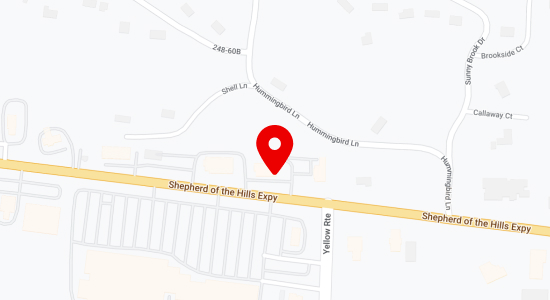
Please note that our law firm's address is for mail correspondence only. We do not accept in-office visits to this location. To schedule an appointment or consult with an attorney, please contact us via phone or email. Our contact information is readily available on our website. We look forward to hearing from you and strive to supply efficient and accessible legal services to our clients.
Branson, MO 65616