
Former Prosecutor
of 20 Years on
Your Side
of 20 Years on
Your Side









A Missouri DWI arrest can put your driver’s license in jeopardy before the criminal charge is resolved. The ticket filed in court and the action taken against your driving privilege are separate matters. A prosecutor could amend or dismiss the criminal charge without automatically undoing an administrative suspension. Likewise, success at a license hearing does not by itself dispose of the criminal case.
That separation makes the first days after an arrest especially important. The notice handed to you by an officer may also function as a temporary permit, but it does not preserve your right to a hearing indefinitely. In a qualifying blood alcohol concentration case, the Missouri Department of Revenue generally must receive or have a postmarked hearing request within 15 days. A refusal case follows a different route through the circuit court and has its own filing deadline.
Scrivner Law Firm represents drivers in Taney County and surrounding southwest Missouri communities. Attorney Dayrell Scrivner brings more than 30 years of legal experience, including approximately 20 years as a prosecutor. He uses that background to examine the government’s proof, identify procedural problems, and help clients address both the license proceeding and the related DWI charge.
After an alcohol-related arrest, an officer may take a Missouri license and provide a Notice of Suspension or Revocation of Driving Privilege, commonly Form 2385, along with a temporary driving permit when applicable. Do not assume that an upcoming court date protects your license. The administrative deadline usually arrives much sooner than the first meaningful setting in the criminal case.
For an administrative alcohol action based on a test result, Section 302.530, RSMo., allows a driver to request a Department of Revenue hearing within 15 days after receiving the notice. The request must be timely received or postmarked. A timely request generally stays the effective date of the action until a final order following the hearing, subject to statutory limits concerning delays requested without good cause. If no timely request is made, the Department may deny a hearing, leaving no further administrative appeal.
When the alleged basis is refusal to submit to a chemical test, the process is not the same Department hearing. Under Section 302.574, RSMo., the driver may petition the circuit or associate circuit court in the county where the arrest or stop occurred. Missouri Department of Revenue guidance states that the petition for review must be filed within 30 days from issuance of the Notice of Revocation. Because the initial temporary permit is generally valid for only 15 days, waiting until the end of that filing period can still create a gap in lawful driving.
The type of notice determines where the challenge begins and what must be proved.
Sections 302.500 through 302.540, RSMo., govern administrative alcohol suspensions and revocations. Under Section 302.505, the Department may act when it determines that a person was arrested upon probable cause to believe the person drove with an alcohol concentration of at least .08%. Different provisions apply to drivers under 21, including the .02% threshold described in the statute.
At a hearing under Section 302.530, the State bears the burden of proof by a preponderance of the evidence. The central inquiry is whether the person drove under the circumstances stated in Section 302.505. In practice, that normally requires proof that the officer had probable cause for the DWI arrest and that a reliable chemical test showed an alcohol concentration at or above the applicable statutory level.
The hearing may be conducted by telephone or, when properly requested, at a regional location designated by the Director of Revenue. A hearing examiner licensed to practice law in Missouri presides. The certified officer report is admissible evidence, and the officer does not automatically have to testify in person. That feature makes careful advance review of the Alcohol Influence Report and supporting records essential.
Missouri’s implied-consent law, Section 577.020, provides that a person operating a vehicle on the state’s public highways is deemed to have consented to authorized chemical testing under specified circumstances. Section 577.041 requires the officer to explain the reason for requesting the test, advise that refusal evidence may be used against the person, and warn a vehicle operator that refusal will result in immediate license revocation. If the person asks to speak with a lawyer, the statute allows 20 minutes to attempt contact. Continued refusal after that period may be treated as a refusal.
Section 302.574 authorizes a one-year revocation for refusal. At judicial review, the court is limited to deciding whether the person was arrested or stopped, whether the officer had the required reasonable grounds, and whether the person refused the test. If any required issue is decided in the negative, the court must order reinstatement.
A driver may ask the court to stay the refusal revocation while the petition is pending, but a stay is discretionary—it is not automatic. If granted on the prescribed form, the order serves as proof of the privilege to drive until the proceeding is resolved.
A license challenge is not won simply by explaining that losing driving privileges would cause hardship. Employment, caregiving, medical appointments, and transportation needs matter when planning for restricted or limited driving, but the hearing itself turns on statutory elements and admissible evidence.
The defense may examine:
– Whether the officer had adequate facts to believe the driver was operating a vehicle while intoxicated;
– Whether reports, citations, and test records identify the correct person, time, and incident;
– Whether the breath-testing instrument and operator complied with applicable rules and procedures;
– Whether required observation practices, maintenance records, permits, and documentation support the reported result;
– Whether a blood, urine, or other sample was lawfully obtained, handled, and analyzed;
– Whether the driver’s words or conduct amounted to an actual refusal rather than confusion, inability, or an unsuccessful attempt;
– Whether the officer gave the warnings required by Missouri’s implied-consent statute; and
– Whether a request to contact counsel was handled consistently with the statutory 20-minute opportunity.
The right strategy depends on the record. Video may clarify what was said at the roadside or station. Dispatch information can affect the timeline. Medical conditions may explain physical observations or difficulty providing a sample. Breath-test records may reveal whether the instrument, operator, and procedure satisfied the governing requirements. An attorney can also assess whether the officer’s live testimony should be sought rather than allowing the case to rest solely on the certified paperwork.
If the Department rescinds a BAC-based action, the administrative suspension or revocation is canceled. If the hearing examiner sustains it, the driver has another short deadline. Section 302.530 provides that the Department’s decision becomes final unless the driver files an appeal within 15 days after notification. Section 302.535 permits a petition for trial de novo in the circuit court of the county where the arrest occurred.
A trial de novo is a new civil proceeding before a judge, not a jury. The State again bears the burden of presenting the evidence. Filing the petition does not itself stay the suspension or revocation, although a qualifying driver may receive a restricted driving privilege under the statutory framework.
In a refusal case, the circuit court is the initial forum rather than a second stage after a Department hearing. If the court sustains the refusal revocation, the driver generally serves any remaining portion of the one-year period. If the court finds a required element was not established, it orders the license reinstated.
The administrative result and the DWI prosecution remain independent under Section 302.505. Evidence overlaps, but the forums, burdens, deadlines, and possible outcomes are not identical. Coordinating the defense can prevent a position taken in one proceeding from unnecessarily harming the other.
The length and conditions of a BAC-based action depend in part on the driver’s record. Under Section 302.525, a driver with no prior alcohol-related enforcement contact during the immediately preceding five years generally faces 30 days of suspension followed by 60 days of restricted driving privilege. The statute requires proof of financial responsibility and makes a functioning, certified ignition interlock device a condition of that restricted privilege.
The same provision offers an alternative for an otherwise qualifying driver who files proof that every vehicle the person operates has an approved ignition interlock device. In that situation, there is no initial suspension period; instead, the person completes a 90-day restricted-driving period. Device violations or tampering can delay reinstatement, and failure to maintain required proof can terminate the privilege.
If the driving record shows one or more prior alcohol-related enforcement contacts within the preceding five years, Section 302.525 calls for a one-year revocation. A refusal under Section 302.574 also produces a one-year revocation. Eligibility for any limited driving privilege is fact-specific and may depend on the driver’s complete record, the reason for withdrawal, proof of SR-22 financial responsibility, installation of an ignition interlock device, and other statutory restrictions.
Drivers should not operate a vehicle merely because they have filed a challenge or applied for a privilege. They should drive only while a valid temporary permit, restricted privilege, limited privilege, or court-issued stay is actually in effect.
Finishing a suspension or revocation period does not necessarily restore a license automatically. Section 302.540 requires successful completion of a Substance Awareness Traffic Offender Program, or an approved comparable program, before reinstatement following an action under Sections 302.500 through 302.540. Section 302.574 contains a corresponding program requirement for refusal revocations.
The Department may also require an SR-22 insurance filing, payment of a reinstatement fee, and proof of ignition-interlock compliance. Requirements differ according to the type of action and the driver’s history. Multiple withdrawal actions can overlap, so satisfying one notice may not clear every obstacle on the driving record. Reviewing the record early helps identify what must be completed and when documents should be filed.
License proceedings move quickly and can depend on details buried in standardized reports. Dayrell Scrivner’s years as a prosecutor give him firsthand familiarity with how law enforcement investigations are assembled and how the State presents alcohol-related cases. As a Missouri state-licensed specialist instructor for universities and police academies, he has also taught criminal law and criminal procedure.
That experience supports a practical defense: preserve the hearing, obtain the available evidence, test the State’s proof, and plan for lawful driving options if necessary. Scrivner Law Firm provides individualized guidance rather than treating the license case as an afterthought to the criminal charge. From Branson, the firm serves clients in Taney County communities including Branson, Forsyth, Hollister, Merriam Woods, and Rockaway Beach, as well as clients in Stone and Christian Counties.
The paperwork issued after a Missouri DWI arrest may provide only a short window to contest the loss of your driving privilege. Missing the applicable deadline can allow a suspension or revocation to take effect without the evidence being challenged. Prompt legal review can clarify which procedure applies, identify weaknesses in the officer’s reports or chemical-test evidence, and determine whether restricted or limited driving options may be available.
Dayrell Scrivner draws on more than 30 years of legal experience, including approximately 20 years as a prosecutor, when representing drivers facing administrative alcohol actions and refusal revocations. Contact Scrivner Law Firm as soon as possible after receiving a suspension or revocation notice. The firm can review the circumstances of the arrest, explain the next steps, and help you pursue an informed strategy for protecting your license.
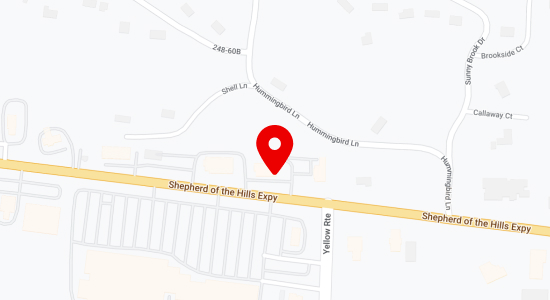
Please note that our law firm's address is for mail correspondence only. We do not accept in-office visits to this location. To schedule an appointment or consult with an attorney, please contact us via phone or email. Our contact information is readily available on our website. We look forward to hearing from you and strive to supply efficient and accessible legal services to our clients.
Branson, MO 65616