
Former Prosecutor
of 20 Years on
Your Side
of 20 Years on
Your Side








An animal cruelty accusation in Missouri can involve more than a general claim that an animal was mistreated. State law distinguishes among offenses such as animal neglect and animal abuse, and the applicable charge may depend on the accused person’s relationship to the animal, the care provided, the degree of harm involved, and whether prosecutors can establish the required mental state.
Those distinctions can significantly affect the consequences of a case. Some violations are misdemeanors, while animal abuse can become a felony under certain circumstances. An investigation may also involve veterinary evidence, photographs of the animal or property, witness statements, questions about ownership or custody, and proceedings concerning the removal or return of the animal.
Scrivner Law Firm defends people accused of criminal offenses in Taney County and throughout Southwest Missouri. Attorney Dayrell Scrivner brings decades of legal experience, including two decades as a prosecutor, to examining how animal cruelty allegations were investigated, whether the evidence supports the specific offense charged, and what issues may be raised in the defense.
Missouri’s principal animal-protection provisions appear in Chapter 578 of the Revised Statutes of Missouri. For many cruelty-related cases, the starting point is RSMo 578.009, which addresses animal neglect, or RSMo 578.012, which addresses animal abuse.
Those offenses are not interchangeable. A poor living condition does not automatically prove intentional abuse, and an injured animal does not by itself establish who caused the injury or whether the accused person acted purposely, intentionally, or knowingly.
The statutory wording can become especially important when several people live on the same property, responsibility for an animal is disputed, an animal has an underlying medical condition, or the prosecution is relying on photographs without a complete timeline.
RSMo 578.005 supplies definitions used in the animal-neglect and animal-abuse statutes. “Adequate care” means normal and prudent attention to an animal’s needs, including wholesome food, clean water, shelter, and health care necessary to maintain good health for that species.
The statute also defines an “owner” broadly. The term can include not only someone who formally owns an animal but also a person who keeps or harbors the animal or represents that he or she is doing so. “Harbor” generally means feeding or sheltering an animal at the same location for three or more consecutive days.
These definitions can create factual disputes. A person may live where animals are present without having accepted responsibility for them. Whether care was adequate may depend on the species, weather, veterinary needs, duration of the alleged problem, access to food and water, and steps taken to address illness or injury.
A person may commit animal neglect by having custody or ownership of an animal and failing to provide adequate care. The statute also covers knowingly abandoning an animal without making provisions for adequate care.
Ordinarily, animal neglect is a Class C misdemeanor. If the person has previously been found guilty of animal neglect, including a qualifying offense from another jurisdiction, the offense becomes a Class B misdemeanor.
For a first finding of guilt, the court has authority to waive fines and penalties if the person demonstrates that adequate, permanent remedies for the neglect have been made. That provision does not mean corrective action automatically resolves the charge, but the condition of the animal and the response to the alleged neglect may remain relevant.
A neglect investigation may focus on matters such as food, water, shelter, sanitation, veterinary treatment, confinement, temperature exposure, or abandonment. The defense should determine not only what officers observed, but when they observed it and how long the condition allegedly existed.
Animal abuse requires a different analysis. RSMo 578.012 applies when a person intentionally or purposely kills an animal in a manner not allowed or exempted by law, purposely or intentionally causes injury or suffering to an animal, or knowingly fails to provide adequate care while owning or having custody of an animal and that failure results in substantial harm.
Animal abuse is generally a Class A misdemeanor. It becomes a Class E felony when the defendant has previously been found guilty of animal abuse or when suffering caused purposely or intentionally results from torture or mutilation consciously inflicted while the animal was alive.
That distinction makes proof of intent, knowledge, causation, and the nature of the injury central to many cases. Veterinary evidence may establish that an animal was injured, but the prosecution still must prove the elements of the charged offense against the accused person. A defense may challenge whether the injury was accidental, whether it resulted from disease or another animal, whether the accused had custody or control, or whether the State can prove the required mental state.
The classification of the offense determines the basic sentencing range.
A Class C misdemeanor may carry up to 15 days in jail and a fine of up to $750. A Class B misdemeanor may carry up to six months in jail and a fine of up to $1,000. A Class A misdemeanor may carry up to one year in jail and a fine of up to $2,000. A Class E felony may carry up to four years of imprisonment and a fine of up to $10,000.
Consequences can extend beyond the statutory maximums. A conviction may affect employment, licensing, firearm rights in a felony case, future proceedings, and the possession or return of the animal.
Not every act that injures or kills an animal falls within Missouri’s animal-abuse provisions. RSMo 578.007 identifies categories of conduct to which the principal animal-protection statutes do not apply.
Examples include licensed veterinary care, bona fide scientific experiments, lawful hunting, fishing, and trapping, certain compliant zoological facilities, accepted rodeo practices, normal or accepted farm-animal husbandry, lawful humane killing by authorized officials, killing house or garden pests, and certain field-trial, training, and hunting practices.
The statute also contains circumstances involving the killing of an animal by its owner or the owner’s agent and circumstances involving an animal off its owner’s property that is injuring a person or farm animal. Whether an exemption applies depends on the actual facts and statutory conditions. The existence of an injured or dead animal alone does not answer that question.
Animal-cruelty cases may involve more than a criminal charge. Missouri law allows authorized officials to seek a warrant to enter private property to inspect, care for, or impound animals when probable cause supports an alleged violation of the animal-protection statutes.
Under RSMo 578.018, an impounded animal may be placed with a veterinarian, animal-control authority, or animal shelter. The statute also provides procedures for disposition and permits an owner, custodian, or other person claiming an interest to post bond or security to cover care and keeping for a specified period.
RSMo 578.021 further provides that when a person is found guilty of animal neglect or animal abuse, a court may determine that an animal should not be returned if the court is satisfied the animal would be subjected to neglect or abuse in the future.
Because the criminal charge and the status of the animal can develop on separate tracks, deadlines and court procedures concerning custody of the animal should not be overlooked while the criminal case is being defended.
Animal cases can appear straightforward when viewed through one image. The full record may tell a different story.
Police reports and animal-control notes can be compared with body-camera footage, photographs, property records, veterinary findings, purchase receipts, text messages, surveillance recordings, witness statements, and records showing efforts to obtain food, shelter, medication, or veterinary care.
The timeline is frequently important. A photograph may show an animal at a particular moment without establishing how long the condition existed, what occurred immediately beforehand, or what steps were already underway. Veterinary conclusions may also require examination of whether an injury could have resulted from disease, age, an accident, another animal, or a condition unrelated to the accused person’s conduct.
Statements made during the investigation can also matter. A person may make assumptions or accept responsibility for an animal actually controlled by someone else. Those statements should be evaluated alongside objective evidence.
There is no single defense that applies to every animal-cruelty allegation. The appropriate strategy depends on what prosecutors must prove.
A defense may examine whether the accused actually owned, kept, harbored, or had custody of the animal. It may challenge whether the care provided was legally inadequate, whether any deficiency caused substantial harm, or whether the alleged condition was temporary and promptly addressed.
In an abuse case, the focus may shift to intent. Evidence that an injury occurred is not necessarily evidence that it was purposely or intentionally inflicted. Where the allegation involves failure to provide care resulting in substantial harm, the State must address both knowledge and causation.
Search-and-seizure issues may also matter. If officers entered private property, seized animals, or collected evidence, the defense can examine whether they acted pursuant to lawful authority, a valid warrant, consent, an applicable exception, or another legally sufficient basis.
Finally, witness credibility may be significant when the complaint arises from a family dispute, neighbor conflict, landlord-tenant disagreement, breakup, ownership dispute, or other situation in which the reporting person has a separate motive to characterize events in the worst possible light.
Some allegations involving animals fall under statutes separate from ordinary neglect or abuse.
RSMo 578.025 makes dogfighting a Class E felony when the statutory elements are met, including certain conduct involving owning, possessing, keeping, or training a dog with the intent that it fight, causing dogs to fight for amusement or gain, or permitting or assisting such conduct on premises under a person’s control.
RSMo 578.026 separately addresses knowingly spectating dogfighting and classifies that offense as a Class A misdemeanor.
Missouri also has a broader animal-fighting statute, RSMo 578.173, covering conduct such as baiting or fighting animals, staging or promoting fights, permitting fights on controlled premises, knowingly attending, and certain conduct involving animals bred or trained for fighting. A violation is a Class E felony.
Because different statutes can overlap factually while requiring different elements, the charging document should be reviewed carefully rather than assuming that every animal-related accusation is simply an “animal cruelty” case.
Animal-related accusations can produce strong reactions before the evidence has been fully examined. That makes disciplined review especially important. The defense must separate photographs from conclusions, ownership from mere presence, poor conditions from criminal intent, and injury from proof of who caused it.
Attorney Dayrell Scrivner brings decades in the legal profession, including two decades as a prosecutor, to criminal defense matters in Southwest Missouri. His background includes prosecutorial experience, courtroom work, and instruction in criminal law and criminal procedure. That perspective can be useful when evaluating how law enforcement documented an animal investigation, how prosecutors may attempt to prove knowledge or intent, and where the State’s evidence leaves unanswered questions.
Scrivner Law Firm represents criminal defendants in Taney County and surrounding communities and approaches each case according to the facts, the applicable statute, and the evidence available for review.
Animal cruelty allegations may involve questions that go well beyond whether an animal appeared injured or poorly cared for. Ownership, responsibility for daily care, veterinary evidence, the cause of an animal’s condition, and the accused person’s intent can all affect whether the conduct meets Missouri’s requirements for animal neglect, animal abuse, or another offense. The seizure or continued custody of an animal may create an additional issue that requires attention alongside the criminal charge.
Attorney Dayrell Scrivner brings decades of legal experience, including two decades as a prosecutor, to evaluating criminal accusations and the evidence used to support them. Scrivner Law Firm can examine how the animal cruelty allegation developed, whether the facts support the offense charged, and what issues may be raised in response. If you are facing an investigation or criminal charge in Taney County or a surrounding community, call the firm or submit the online contact form to request a consultation.
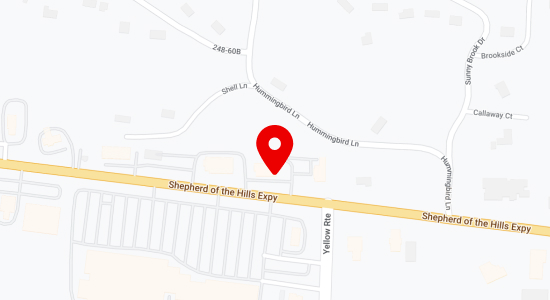
Please note that our law firm's address is for mail correspondence only. We do not accept in-office visits to this location. To schedule an appointment or consult with an attorney, please contact us via phone or email. Our contact information is readily available on our website. We look forward to hearing from you and strive to supply efficient and accessible legal services to our clients.
Branson, MO 65616