
Former Prosecutor
of 20 Years on
Your Side
of 20 Years on
Your Side







Child endangerment accusations carry a force that reaches far beyond the courtroom. The charge itself suggests recklessness, danger, and a failure to protect someone vulnerable. Even before the evidence is fully reviewed, people often assume the worst. Prosecutors know that. So do law enforcement officers. It is one reason these cases are often charged aggressively and described in highly emotional terms.
But emotion is not evidence. Missouri law defines child endangerment in specific ways, and the State still has to prove the case. Under section 568.045, endangering the welfare of a child in the first degree includes knowingly acting in a manner that creates a substantial risk to the life, body, or health of a child less than seventeen. Section 568.050 addresses second degree endangering the welfare of a child. Depending on the allegation, the difference between first and second degree can dramatically affect the potential punishment and the defense strategy.
Scrivner Law Firm represents individuals accused of serious child related offenses in southwest Missouri. Dayrell Scrivner, a former prosecutor with many years of criminal law experience, understands how these cases are investigated, charged, negotiated, and tried. That background is especially important when the State is using broad language to turn a disputed set of facts into a felony accusation.
Many people hear “endangering the welfare of a child” and picture one narrow type of allegation. Missouri prosecutors use the statute much more broadly. The charge may be tied to an intoxication related incident, a domestic dispute, alleged supervision failures, exposure to dangerous conditions, drug activity in a residence, or a claim that a child was placed near violence or criminal conduct.
That breadth makes the statute powerful, but it also creates room for overcharging. Not every bad judgment call, parenting disagreement, accident, or chaotic household event qualifies as first degree child endangerment. The State still must prove the required mental state and the required risk level.
Section 568.045 focuses on knowingly creating a substantial risk to the life, body, or health of a child. That wording is important. The law is not supposed to criminalize every arguable imperfection in child supervision. It requires proof of a meaningful risk and a knowing act. In the right case, that becomes a major defense issue.
Was the risk truly substantial, or is the prosecution stretching facts after the event? Did the accused knowingly create the risk, or did something happen unexpectedly? Was the situation dangerous in the legal sense, or merely concerning in hindsight? Those questions can shape the entire defense.
Missouri’s first degree and second degree child endangerment statutes are related, but they are not identical. First degree cases often involve allegations the State considers serious enough to support felony exposure. Second degree cases may involve lesser allegations, though they still can carry heavy consequences. In some cases, defense work is directed toward showing that the facts do not support the more severe charge the prosecution filed.
That kind of distinction can matter enormously. The difference between a felony and a misdemeanor can affect employment, housing, firearm rights, custody disputes, professional licensing, and long term reputation. A careful defense does not simply ask whether some problem occurred. It asks whether the State can truly prove the specific grade of offense it chose to charge.
Child endangerment cases are often built from stressful situations. Police may arrive during a domestic argument, after a traffic stop, after a neighbor complaint, or after a call from a school, hospital, or family member. Officers then interpret a tense moment and reduce it to a criminal allegation. That process can leave out crucial context.
A prosecutor may point to a moment that now looks dangerous and treat that as proof of criminal conduct. But hindsight is not the legal standard. The defense may need to show the parent or caregiver was responding to a fast moving situation, did not knowingly create a substantial risk, or was making a judgment that was imperfect but not criminal.
In some cases, the accusation comes from a co-parent, partner, relative, or other person with a history of conflict with the accused. That does not automatically make the report false, but it does mean motive and credibility need close attention. Child endangerment charges sometimes arise in the middle of custody disputes, breakups, or family conflict where criminal allegations can become a weapon.
A case involving intoxication, paraphernalia, or alleged drug activity near a child will usually be prosecuted forcefully. But even there, the defense must examine what the evidence actually shows. Was the child truly exposed to the claimed danger? Was the accused aware of the condition? Is the prosecution stacking assumptions on top of a stressful scene?
A criminal defense lawyer handling these cases must appreciate that the risk is not limited to the criminal file. An accusation under section 568.045 or 568.050 can spill into custody disputes, parenting time restrictions, Children’s Division involvement, safety plans, and court ordered conditions that shape family life long after the criminal case ends.
That broader impact changes how the defense should be handled. Statements that seem minor in criminal court may be repeated elsewhere. A rushed plea can create major damage in a custody dispute. Even a dismissed criminal case does not automatically erase the practical consequences of the accusation. These matters must be approached with care from the beginning.
Strong child endangerment defense work is usually built on close examination of the facts rather than slogans.
Was the child injured? Afraid? Unsupervised? Exposed to a specific danger? The prosecution’s language may be sweeping, but the actual evidence sometimes reveals a narrower or less serious situation than first described.
The statute’s mental state matters. Did the accused know about the claimed hazard or risk, or is the State assuming knowledge after the fact? This can be critical in household cases, vehicle cases, and allegations involving other adults.
Even where the State can show bad judgment, that does not necessarily mean it can prove the greater offense filed. The defense should constantly test whether the charge matches the facts.
Dayrell Scrivner’s former prosecutor experience helps in child endangerment defense because he knows how the State tends to build these cases. He understands how law enforcement reports are framed, what themes prosecutors rely on, and where a case may be weaker than the charging decision suggests. That perspective can make a real difference when the defense is deciding whether to attack the sufficiency of the allegations, negotiate from a position of factual strength, or prepare for trial.
Clients facing these charges also benefit from a lawyer who understands how high the emotional temperature can run. The defense has to remain disciplined, credible, and focused on the statute, not on the outrage the prosecution hopes to generate.
A child endangerment accusation can make a parent, guardian, or caregiver feel as though the case is already lost in the court of public opinion. It is not. The law still matters. The burden of proof still matters. The difference between actual criminal conduct and an emotionally charged accusation still matters.
Scrivner Law Firm approaches these cases by closely analyzing the statute, the facts, the witnesses, and the real risk the evidence can establish. That includes examining whether the State can prove a substantial risk, whether the defendant knowingly created it, and whether the charged degree is even supportable under Missouri law.
An endangering the welfare of a child charge can threaten your record, your family relationships, your parenting rights, and your future in one stroke. The sooner the defense begins, the sooner the evidence can be tested and the prosecution’s narrative can be challenged.
If you are accused of child endangerment in Missouri, contact Scrivner Law Firm promptly. Dayrell Scrivner and his team can evaluate the facts, the charging level, the witness credibility issues, and the broader family law consequences that often follow. When the State tries to turn a difficult situation into a criminal label that follows you for years, experienced defense representation matters.
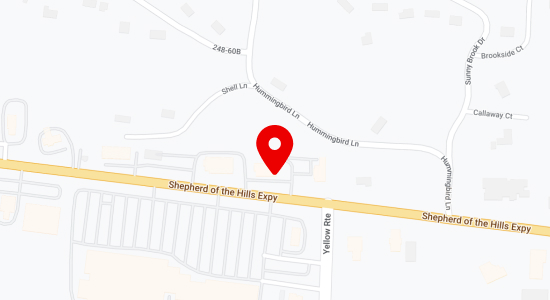
Please note that our law firm's address is for mail correspondence only. We do not accept in-office visits to this location. To schedule an appointment or consult with an attorney, please contact us via phone or email. Our contact information is readily available on our website. We look forward to hearing from you and strive to supply efficient and accessible legal services to our clients.
Branson, MO 65616