- Contact Us Now: (417) 699-0074 Tap Here to Call Us


When Can You Claim Self-Defense Against Assault Charges in Missouri?


Self-defense may justify physical force in a Missouri assault case when the person reasonably believed that force was necessary to protect against unlawful force. The justification is not available simply because two people argued, someone felt offended, or a confrontation ended badly. Missouri law distinguishes the level of force used, the perceived danger, the person’s role in starting the encounter, and certain circumstances involving a home or occupied vehicle.
Those distinctions can determine whether an assault accusation is legally justified or criminal. Investigators may examine injuries, witness accounts, video, threats, the relative positions of the people involved, and whether anyone tried to withdraw. The circumstances immediately before force was used often matter as much as the injuries afterward. Self-defense requires a careful factual and statutory analysis rather than a slogan about a right to fight back.
Scrivner Law Firm represents clients accused of criminal conduct in Taney, Stone and Christian counties and throughout Southwest Missouri. Attorney Dayrell Scrivner brings decades of legal experience, including approximately two decades as a prosecutor, to assessing competing accounts, evaluating the state’s burden of proof, and identifying whether Missouri’s justification rules may apply to the particular confrontation.
Reasonable Belief and the Threat of Imminent Force
Missouri Revised Statutes section 563.031 generally permits physical force when, and to the extent that, a person reasonably believes it is necessary to defend against another person’s use or imminent use of unlawful force. A claim therefore turns on both perception and justification. A person need not necessarily wait to suffer an injury, but a speculative fear that somebody might become violent someday is not the same as a threat of imminent force.
A reasonable-belief inquiry considers the situation as the defender understood it, while still applying a legal standard. Words, prior actions, sudden movement, access to weapons, physical distance, and the surroundings can all affect the analysis. A witness viewing only the final seconds may miss a threat that helps explain a response, or may misinterpret a movement that did not actually signal danger. Context is critical and requires evidence.
An ordinary disagreement is not itself legal authorization to use physical force. If two people exchange insults in a Branson parking lot, the fact that one person raised a voice may not justify a punch. If someone reasonably believes another is about to strike, the analysis changes. The amount of force used must still be evaluated in relation to what seemed necessary. The justification does not extend without limits to retaliation for conduct that has ended.
Evidence of a threat may arise from video, contemporaneous messages, injuries, emergency-call recordings, and observations from people who witnessed the beginning. Each source has limitations. A bruise may show physical contact but not who initiated it. Camera placement may conceal a person’s hands. Defense counsel should reconstruct the sequence carefully and avoid claiming certainty about events that the available evidence does not establish.
Nondeadly Force and Deadly Force Are Not Interchangeable
Section 563.031 treats ordinary physical force differently from deadly force. The statutory limitations on deadly force are more demanding. The law addresses reasonable belief in the necessity of deadly force to protect against death, serious physical injury, or a forcible felony, and also describes specified circumstances involving unlawful entry into certain occupied places or private property. The precise provision matters because it would be misleading to describe every confrontation as a deadly-force case.
Using an object or weapon may change the degree of force involved, but the analysis depends on the conduct and risks, not merely the object’s name. A threat involving a firearm, a knife, or a vehicle can introduce serious evidentiary questions. Investigators may examine distance, accessibility, whether the object was displayed or used, and whether the person reasonably perceived a danger meeting the relevant legal threshold. Unsupported assumptions about weapons can distort the case.
Missouri’s lack-of-duty-to-retreat provisions are frequently misunderstood. Under section 563.031, the statute describes circumstances in which a person has no duty to retreat, including locations where that person has a lawful right to be. That does not mean any use of force is automatically justified. The underlying requirements concerning reasonable belief, necessity, degree of force, and statutory limitations remain essential to the defense.
An encounter may change rapidly. A person may initially use a minor amount of force to create distance, then confront a different threat after the other person produces a weapon. Conversely, continued violence after a threat has ended may no longer be justified. A precise timeline helps determine whether each material action was protective or punitive. Treating the entire incident as one undifferentiated fight obscures this legal distinction.
The Initial Aggressor and Withdrawal Can Be Decisive
Section 563.031 contains restrictions relating to an initial aggressor, with defined exceptions. A person who starts a confrontation cannot simply label every later blow self-defense. The statute recognizes circumstances in which an initial aggressor withdraws from the encounter and effectively communicates withdrawal, but the other person persists with unlawful force or a threat. The sequence and any communication can therefore be crucial.
Physical movement may be evidence of withdrawal, but it should be assessed with words, distance, and the other person’s response. Someone who steps away while still issuing threats may present a different case from someone who clearly breaks off and is pursued. Surveillance footage often begins after the key exchange, so the defense may need independent witnesses or communications to reconstruct the initial confrontation.
Missouri’s statutory limits also address a person engaged in or escaping from a forcible felony. It is important to identify the specific basis for any claimed restriction rather than suggest that every unrelated wrongdoing permanently removes all possibility of justification. The prosecutor’s theory, charge, and circumstances of the asserted defensive action must be compared with the actual language of section 563.031.
Mutual combat presents additional complexity. When both people willingly participate in violence, it can be difficult to determine who escalated the danger and when any genuine attempt to disengage occurred. Injuries to both people do not necessarily prove equal responsibility. Counsel should investigate who initiated physical contact, what conduct each person saw, whether anyone withdrew, and whether the response exceeded what was reasonably necessary.
Assault Charges Require Proof Beyond a Disputed Story
Missouri assault provisions distinguish different degrees of criminal conduct. Depending on the allegation, the relevant statutes can address attempts to cause serious injury, knowing physical injury, or other prohibited behavior. Sections 565.050 through 565.056 include the state assault framework, while sections 565.072 through 565.076 address domestic assault. The specific charged subsection and the underlying relationship determine which elements the prosecution must prove.
A claim of self-defense does not erase the prosecution’s burden to prove the charged offense beyond a reasonable doubt. The statute also addresses which party must inject the issue of justification and identifies particular burden rules. An attorney should examine the applicable instruction and procedural requirements rather than presume the defendant must independently prove innocence. Evidence sufficient to raise a justification issue may require careful presentation.
Officers called after a fight may see a defendant with fewer injuries than the complaining witness and initially assume that person was the aggressor. Injuries matter, but their relative severity does not necessarily resolve the legal sequence. Medical records, photographs taken promptly, prior injuries, and explanations consistent with the physical evidence can help clarify the nature and timing of contact.
If the incident occurred in a shared household, protective orders and release conditions may complicate the situation. A criminal charge can proceed independently of a related civil protection proceeding. Defendants should not contact a protected person in violation of an order even to seek an explanation or reconciliation. Preserving messages, avoiding public confrontation, and allowing counsel to obtain witness information lawfully are safer than trying to resolve the dispute personally.
Witnesses and Video Can Support or Undermine Justification
Witness testimony often contains genuine differences in perspective. A person across the street may see who fell but not hear a warning; someone standing behind a participant may hear words but not see the first physical movement. Investigators should identify the witness’s vantage point, any obstruction, lighting, and the length of observation. A consistent story is not automatically accurate, and inconsistencies are not automatically proof of dishonesty.
Video can be decisive but incomplete. Store cameras may not record sound, may show only a narrow angle, or may start after someone moved into view. Phone recordings may reflect an edited selection. Counsel should seek original files, timestamps, and additional angles when available. Body-camera footage beginning after officers arrived may help with statements and injuries, but cannot independently show a confrontation it did not record.
Digital messages can illuminate threats, prior disputes, or efforts to disengage, yet prior tension alone does not prove the imminent danger required at the moment force was used. Messages should be examined in sequence and authenticated where necessary. Selective quotations may omit reconciliation or subsequent threats. The defense must connect relevant context to the event without assuming every past disagreement is admissible.
A defense investigation should also examine physical conditions. Was a doorway blocked? Could a person see an object thought to be a weapon? Did furniture or terrain limit movement? Were there other people at risk? Site photographs, measurements, or available medical documentation may assist. The goal is not to create an elaborate reconstruction for its own sake but to assess whether the claimed perception and response fit the evidence.
How a Taney County Defense May Develop
A Branson assault allegation can lead to local investigation and Taney County state charges within Missouri’s Forty-Sixth Judicial Circuit. Early proceedings may include release conditions, discovery, and preliminary motions. A defendant should identify the exact charge and preserve evidence before recordings or witness memories are lost. The county setting supplies procedural context; Missouri’s statewide self-defense statute supplies the principal justification standard.
After reviewing the evidence, counsel may assess whether to seek dismissal, challenge a statement or search, pursue negotiations, or prepare for trial. A justification argument and a challenge to the underlying elements can coexist when supported by the record. For example, a defendant may dispute being the person who caused an injury while also evaluating whether the force shown in a recording could have been justified.
Potential consequences depend on the offense and disposition. Criminal assault findings may affect employment, protective conditions, or future cases. A negotiated result should be assessed for collateral effects and for the factual admissions it requires. Defendants should understand that neither self-defense nor a prior absence of convictions guarantees a particular outcome.
Preparation matters most when it is targeted. An attorney can identify the precise threat alleged, compare the level of force to the statutory threshold, and evaluate whether an aggressor exception or withdrawal issue is present. That approach is more useful than general statements about Missouri being a stand-your-ground state. The statute must be applied to the specific people, place, and sequence involved.
Protect Your Rights Against Assault Charges With Scrivner Law Firm
An assault investigation can become complicated as officers interview witnesses, evaluate injuries, obtain video, and determine whether charges reflect the entire confrontation. Prosecutors may receive competing accounts that omit the initial threat or the moment a person withdrew. Early defense involvement can help preserve that missing context and identify how Missouri’s justification rules may apply before important evidence disappears.
Attorney Dayrell Scrivner brings former prosecutorial experience and criminal defense work to allegations involving violent encounters. If you are accused of assault in Taney, Stone or Christian counties and believe you acted defensively, contact Scrivner Law Firm to discuss the circumstances, the evidence, and relevant Missouri law. Ask the firm for a consultation centered on the specific events leading to the charge.
OUR ADDRESS
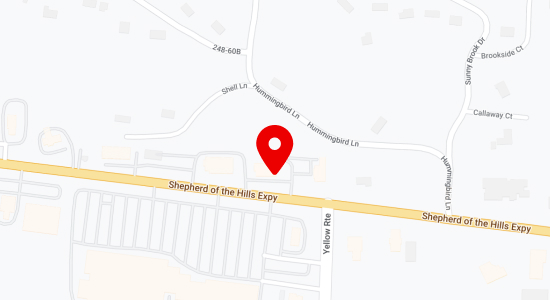
Please note that our law firm's address is for mail correspondence only. We do not accept in-office visits to this location. To schedule an appointment or consult with an attorney, please contact us via phone or email. Our contact information is readily available on our website. We look forward to hearing from you and strive to supply efficient and accessible legal services to our clients.
Ste Q, #451
Branson, MO 65616