- Contact Us Now: (417) 699-0074 Tap Here to Call Us


When Can Possessing a Firearm Become a Crime in Missouri?


Possessing a firearm in Missouri is not automatically a criminal offense. Many adults may lawfully own and carry guns, but criminal liability can arise from a person’s legal status, where a weapon is carried, or how it is displayed, discharged, or used. Missouri’s unlawful-possession statute addresses certain people who cannot possess firearms, while its unlawful-use statute regulates particular conduct. Federal restrictions can apply independently of state law.
A charge can therefore involve issues beyond whether police found a gun. Investigators may examine prior convictions, the person’s knowledge and control of a firearm, the circumstances of an encounter, and whether a statutory exception applies. What appears to be a straightforward possession allegation may require examining court records, officer observations, witness accounts, video, the search itself, and the wording of the statute prosecutors choose.
Scrivner Law Firm defends people facing criminal allegations in Taney, Stone and Christian counties and throughout Southwest Missouri. Attorney Dayrell Scrivner brings decades of legal experience, including approximately two decades as a prosecutor, to considering how a weapon was found, whether the accused can be connected to it, and whether evidence establishes the required elements of the charged offense.
When Possession Is Restricted by a Person’s Legal Status
Missouri Revised Statutes section 571.070 makes firearm possession unlawful for specified categories of individuals. Those categories include people with qualifying felony convictions, fugitives from justice, people habitually in an intoxicated or drugged condition, and those currently adjudged mentally incompetent. Knowing possession and a qualifying status are important components. The statute does not make ordinary ownership by every Missouri resident a crime; nor does Missouri’s relatively permissive approach to carrying a firearm erase the specified restrictions.
A felony conviction may come from Missouri, another state, or the federal system. An out-of-state conviction requires attention to the statute’s language concerning offenses that would constitute a felony if committed in Missouri. Counsel should examine certified dispositions, the identity of the person convicted, and the applicable offense rather than presume a police database entry settles the issue. An accusation that never led to a qualifying conviction should not automatically be treated as equivalent to one.
The current general grading under section 571.070 is a class C felony, with class B felony treatment for certain qualifying prior convictions. The distinction can affect sentencing exposure and resolution discussions. Prosecutors must support the required status and possession evidence; a defendant’s background cannot substitute for proof of the current charge. Some exceptions may be narrow and fact-specific, making it important to consult the operative statutory text rather than rely on online summaries based on older law.
Federal law adds a separate layer. Title 18, United States Code, section 922(g) contains firearm restrictions affecting certain categories, which can differ from the state statute. A person may have permission to carry under a state rule but still be prohibited by federal law because of a qualifying conviction, court order, or another statutory circumstance. Whether an alleged offense is prosecuted in state or federal court matters, as do the definitions and procedural rules for that forum.
A Gun Nearby Does Not Always Establish Knowing Possession
The difference between proximity and possession can be central when firearms are found in vehicles, shared homes, or temporary lodging. An officer may discover a gun under a seat, in a closet, or inside luggage used by several people. Mere physical closeness does not always answer who knew about the weapon or who exercised control over it. The surrounding evidence becomes particularly important where several individuals had access to the same space.
Actual possession is comparatively direct, such as a firearm carried on a person. Constructive possession raises more disputed questions about awareness and the ability to control an object. Investigators may rely on statements, accessibility, fingerprints, ownership records, or conduct before and after discovery. None of those details should be evaluated in isolation. The legal analysis also depends on what the state must prove for the specific charged subsection.
Imagine a vehicle stopped in Branson with three occupants and a firearm found in a shared compartment. The driver may not own the gun, and the front-seat passenger may not know it is there. Conversely, evidence that someone recently handled or deliberately concealed it may be relevant even if the firearm was not physically on that person’s body. The vehicle registration, seating arrangement, photographs, audio, and timing of the search can make competing explanations more or less credible.
Reports sometimes state that a weapon was found in ‘the defendant’s car,’ without describing whether the person owned or borrowed the vehicle or whether others recently used it. Reviewing underlying records may expose inaccuracies. Counsel can also analyze the constitutionality of the original stop, any detention, and the search. A firearm’s discovery does not automatically validate the police conduct that preceded it. Where applicable, exclusion of unlawfully obtained evidence may become a pretrial issue.
Unlawful Use of a Weapon Is a Different Allegation
Missouri Revised Statutes section 571.030 covers various forms of unlawful use of weapons. Examples include displaying a weapon readily capable of lethal use in an angry or threatening manner and discharging a firearm into particular vehicles, buildings, or occupied structures. Other subdivisions address distinct conduct and specific exceptions. A person who is otherwise legally allowed to own a firearm may still face charges based on what allegedly occurred during an encounter.
A threatening-display allegation can turn on posture, words, distance, and timing. Seeing a firearm during an argument does not tell the complete story, because the statute’s elements and any available justification still must be examined. Video from a business, a bystander’s telephone, or a vehicle camera may depict movements more accurately than a witness statement created after the event. Counsel should evaluate whether the accusation is supported by the entire interaction rather than its most alarming moment.
A discharge allegation calls for a different investigation. Officers may gather cartridge cases, review bullet trajectories, interview witnesses, and identify the location of a suspected shooter. Where a firearm was recovered, its presence at a location does not necessarily prove who discharged it. The statutory subdivision may also depend on the structure or roadway allegedly involved. Small differences in the scene can affect the legal theory and the relevance of forensic testing.
Use of a firearm in self-defense introduces additional questions under section 563.031. Missouri law addresses reasonably necessary defensive force and specifies limits on deadly force. The claimed threat, the accused person’s role in starting or escalating the encounter, and whether the force was proportionate can be disputed. A self-defense assertion requires factual support; having a lawful gun alone does not prove that using it was justified, while an accusation of threatening display does not automatically defeat a valid justification claim.
Vehicles, Public Places, and Location Restrictions
Missouri’s carry rules should not be reduced to either ‘guns are always legal’ or ‘visible guns are always illegal.’ Eligibility to possess a firearm, the precise activity, and the location may all affect the outcome. Section 571.030 includes provisions involving restricted places described in section 571.107, with exceptions that require close reading. The rules may differ for concealed carry, authorized personnel, and other specific circumstances.
A vehicle creates common practical questions. A stop for speeding or suspected impaired driving may result in officers noticing or locating a gun. The original traffic matter and a potential weapons charge are separate analyses. Counsel should examine why the stop began, whether officers expanded the detention lawfully, and whether a particular passenger or driver could knowingly control the firearm. Lawful ownership does not eliminate potential offenses involving threatening use or prohibited-person status.
Public buildings, schools, and federally regulated properties can implicate different restrictions. Private establishments may also set entry conditions, although a disagreement with a property owner does not automatically become a felony firearm offense. For an incident near a Branson business, lodging property, or entertainment venue, the address, precise premises, posted conditions, and conduct alleged can matter. It would be inaccurate to assume all public places are governed by one uniform prohibition.
A defendant should also scrutinize terminology used in charging papers. A concealed firearm accusation, a prohibited-person charge, and an allegation of reckless discharge are not interchangeable, even when they arise from the same incident. The elements, defenses, penalties, and potential collateral consequences differ. Effective case preparation starts by identifying each actual count and reading the law in force at the time of the alleged act.
How Officers and Prosecutors Try to Prove a Firearm Case
Firearm investigations can involve body-camera video, patrol-car recordings, photographs, dispatch communications, surveillance footage, and technical records concerning the weapon. The timing and completeness of the evidence matter. Video may begin after the most important exchange, and a police report may summarize rather than reproduce a defendant’s exact words. Early preservation requests may be helpful where digital recordings are routinely overwritten.
Statements regarding a gun can be particularly consequential. Officers may ask who owns it, who put it in a bag, or whether someone knew it was present. An acknowledgment that a weapon was in a vehicle is not necessarily an admission that every element of unlawful possession is met. Counsel should examine the questions, the setting, whether custodial interrogation occurred, and any constitutional issues bearing on admissibility.
Forensic evidence can assist but should not be overstated. A fingerprint or biological trace may help establish contact, yet its absence does not always establish that no contact occurred. A spent cartridge case may support an inference about a weapon but ordinarily does not identify the shooter by itself. Independent witnesses can disagree about distances, lighting, or sequence. The complete record must be compared to the elements of the charged offense.
The state must prove guilt beyond a reasonable doubt. Defense arguments might involve identity, knowledge, possession, lawful status, justification, search legality, or reliability of statements. The correct focus depends on the allegation. In a prohibited-person case, generalized claims about the right to bear arms will not replace analysis of the relevant restriction. In an unlawful-use case, proof that the gun was owned lawfully will not resolve disputed threatening conduct.
From a Branson Arrest to Taney County Court
Branson is in Taney County, which is within Missouri’s Forty-Sixth Judicial Circuit. State firearm charges arising in the area may proceed through Taney County court processes, including proceedings in Forsyth. The specific court and procedure depend on the charge. A federal prosecution follows a separate path. Neither the presence of a firearm nor the location of the encounter by itself establishes which forum will ultimately hear the case.
Early proceedings can involve release conditions, identification of charges, scheduling, discovery, and motions. A court may place conditions on a defendant’s conduct while a case is pending. Those conditions need to be read and obeyed even when the underlying accusation is contested. Counsel can help identify preservation needs, investigate disputed events, and prepare challenges to evidence or the prosecution’s legal theory.
Potential consequences go beyond a headline sentence. Depending on the offense and disposition, a firearm conviction may affect later possession rights, employment, background checks, or related professional matters. State and federal rules can interact in complex ways. Before a plea, defendants should ask which statutory violation they would be admitting, what obligations follow, and whether the resulting record could trigger restrictions beyond the courtroom.
No single result is appropriate for every case. Some accusations may be weakened by missing proof of possession or status; others turn on witness credibility or a disputed search. Negotiations may occur, but an offer must be evaluated against the admissible evidence and possible outcomes at trial. A meaningful defense assessment requires reviewing the charging instrument and discovery, not promising that every gun-related arrest can be dismissed.
Speak With Scrivner Law Firm About a Missouri Firearm Charge
A firearm investigation can become complicated while officers confirm criminal-history information, examine a recovered weapon, interview witnesses, and decide whether to seek possession or unlawful-use charges. Prosecutors may evaluate several statutory theories, each with distinct requirements. Early defense involvement can help preserve useful recordings, explain court obligations, and identify factual or constitutional questions before a case becomes harder to investigate.
Attorney Dayrell Scrivner brings extensive criminal-law experience, including work as a former prosecutor, to reviewing these allegations for people in Taney, Stone and Christian counties. If police have questioned you about a firearm or you have already been charged, contact Scrivner Law Firm to discuss the available evidence, potential consequences, and defense considerations. Request a confidential conversation with the firm to address the allegations and your next steps.
OUR ADDRESS
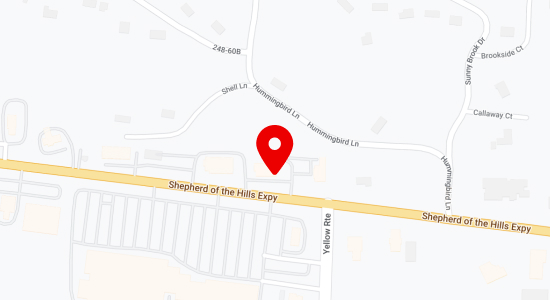
Please note that our law firm's address is for mail correspondence only. We do not accept in-office visits to this location. To schedule an appointment or consult with an attorney, please contact us via phone or email. Our contact information is readily available on our website. We look forward to hearing from you and strive to supply efficient and accessible legal services to our clients.
Ste Q, #451
Branson, MO 65616