- Contact Us Now: (417) 699-0074 Tap Here to Call Us


What Should You Do If You Are Accused of Violating an Order of Protection in Missouri?


Being accused of violating a Missouri order of protection can create a new criminal problem even when no physical confrontation occurred. The controlling question is what the order prohibits, whether the respondent had the required notice, and whether the alleged conduct falls within the statutory terms. Direct communication, indirect contact, travel near a protected location, and disputes involving children may raise different legal issues.
Those distinctions make the actual court order essential evidence. An accuser may report a text message, a social-media interaction, or an encounter at a public place. Officers may respond based on screenshots or statements without having seen the entire exchange. A prior violation can also affect potential charges. The defendant should not assume that an invitation from the protected person changes a court restriction.
Scrivner Law Firm represents people facing criminal accusations in Taney, Stone or Christian counties and throughout Southwest Missouri. Attorney Dayrell Scrivner has decades of legal experience, including approximately two decades as a prosecutor, and draws on that background to assess the precise conditions, the proof of notice, the evidence of alleged contact, and possible defenses.
Obtain the Entire Order Before Evaluating the Accusation
Missouri courts can issue ex parte and full orders of protection under Chapter 455. An ex parte order may be entered before a full hearing, while a full order follows the procedures required for that relief. Neither label alone tells the defendant everything that is prohibited. The written document should be reviewed for prohibited communication, specified addresses, contact distances, child-custody provisions, expiration, and any later modification.
Missouri Revised Statutes section 455.085 addresses specified violations of protection orders. Its provisions cover conduct involving domestic violence, stalking, sexual assault, custody, communication initiated by the respondent, entry onto certain premises, and proximity restrictions under the conditions described in the statute. A prosecutor must identify a legally applicable prohibition and establish the charged violation. Merely having a disagreement with someone who obtained an order is not enough to define the offense.
A respondent should retain every page, including attachments and service information. Sometimes people remember a judge’s verbal explanation but overlook details on an additional page. The enforcement analysis depends on the actual order, not a paraphrase. If there are both criminal release restrictions and a civil protection order, each must be considered separately because one may remain operative even when another is changed or expires.
The order may have been entered in Taney County or elsewhere, and an alleged encounter may occur in Branson. A person should avoid relying on guesses about which court has authority to modify it. Counsel can identify the issuing court and any relevant criminal docket. Until a modification is properly entered, a request from the other party does not rewrite what the court ordered.
Notice and the Difference Between Allegation and Proof
An order-related prosecution may turn on whether the defendant had legally sufficient notice. Section 455.085 expressly addresses notice in specified circumstances, including how a respondent may learn of a full order. Formal service can be important, but the statutory language also recognizes certain other forms of notice. Claiming that no process server personally delivered paperwork may therefore be insufficient by itself to defeat the allegation.
The timeline matters. When was the order issued? When was a copy served or communicated? When did the alleged act happen? A defendant might dispute knowing about the order when an early message was sent but acknowledge learning about it later. The state must apply the law to the relevant moment, rather than treat all communications across several days as though the same notice existed throughout.
Police may rely on dispatch information, electronic records, a copy presented during an encounter, or testimony about earlier warnings. Counsel should seek the underlying records when notice is disputed. A database entry may show that an order existed without conclusively establishing when the person received notice. Conversely, a video showing an officer personally presenting an order can be powerful evidence. Accuracy requires examining the exact record.
Even with notice established, the alleged conduct must match an enforceable term. An order may prohibit all contact or may contain narrower provisions concerning specified places and forms of communication. The defense should compare the language to what allegedly happened. If an exception appears in the order, its scope should be analyzed carefully rather than assumed to excuse unrelated behavior.
Direct Contact, Other People, and Social-Media Messages
Many disputes concern communication. Calls, texts, emails, direct messages, and in-person conversations may violate an order that prohibits contact initiated by the respondent. But the legal analysis remains tied to the written restrictions and statutory requirements. A screenshot may show a message without identifying who actually sent it, whether the account was shared, or what happened before and after.
Indirect contact can create similar problems. Asking a friend or family member to convey a message may be prohibited when the order bars communication through others. Someone accused of using a third party should examine the evidence of authorization and the content allegedly delivered. A relative’s independent decision to speak with the protected person does not necessarily prove that the respondent directed the contact.
Public social-media posts present additional challenges. An open comment visible to many people differs factually from a private message sent directly to the protected person. A post tagging the person or directing another user to contact them may carry different implications. The defendant should preserve original posts and related account details, and counsel should determine which legal prohibition prosecutors assert was breached.
Electronic exhibits can lose context. Messaging applications may display read receipts, forwarded content, automatic notifications, or partial screenshots. The mere appearance of a profile name does not conclusively identify the sender. Platform records, device access, and complete threads may matter. Evidence should be preserved without deleting or modifying relevant communications after an accusation arises.
An order can also restrict conduct at specific locations, including a home, workplace, or school. The defendant may need to determine whether a location was within the restriction and whether the encounter was deliberate. Photographs, property maps, route histories, and video may help resolve a dispute about where someone stood or traveled. Broad assumptions about a person being ‘nearby’ are not a substitute for the actual order.
What If the Protected Person Starts the Conversation?
A protected person’s invitation to meet or speak does not automatically suspend a restraining condition imposed on the respondent. Courts issue and modify orders through legal processes. A text saying ‘you can come over’ may be relevant background but ordinarily is not a substitute for a court modification. A respondent should therefore avoid assuming that mutual consent restores communication rights.
There is an important distinction between whether the protected person initiated an exchange and whether the respondent’s own actions are prohibited. Some statutory language specifically addresses communication initiated by the respondent, while an individual order may contain additional relevant terms. The complete circumstances should be reviewed rather than relying on a blanket claim that any response is always lawful or always criminal.
People may encounter one another unexpectedly at a grocery store, restaurant, or event in Branson. An accidental meeting presents different facts from deliberately arranging a visit, but a person’s actions after recognizing the protected party may still matter. The order may require maintaining distance or avoiding certain contact. A defendant should not prolong an encounter in order to settle personal disagreements.
A shared parenting responsibility can make the situation more difficult. A protection order may include provisions addressing child custody or exchanges, and other court orders may also apply. Parents should not invent exceptions or ask a child to transmit prohibited messages. Counsel can help determine whether lawful procedures for parenting coordination or a requested modification are available.
Private reconciliation also does not automatically end a criminal prosecution for an earlier alleged violation. Prosecutors decide whether to pursue criminal charges, while the court controls changes to the order. A defendant may face overlapping civil and criminal proceedings with different standards. Managing those processes separately helps avoid legal mistakes during an already tense family or personal situation.
Penalties, Prior Violations, and Related Charges
Section 455.085 generally treats specified violations of an ex parte or full order of protection as class A misdemeanors. A qualifying prior guilty plea or finding of guilt for violating an order within the statutory period can increase the classification of a later violation to a class E felony. The exact prior record and dates therefore matter; an accusation alone should not be treated as a qualifying previous conviction.
The statute’s penalty provisions are not a substitute for reading the relevant court order. Prosecutors still need to show which term was violated and that the required circumstances existed. A repeat-offense allegation can add questions concerning the identity of the person convicted, the kind of prior order, and the timing. Certified court records may be necessary to establish those elements.
Some incidents also generate separate allegations of harassment, stalking, domestic assault, or witness tampering. Each has its own statutory elements. The same messages may be examined under more than one theory, but the prosecution must identify and prove each offense that it seeks to sustain. Counsel should assess any overlap and applicable limits on charging or punishment based on the precise conduct.
Release conditions in a new criminal case can add restrictions immediately. A person might obey an older civil protection order yet violate a more recent condition imposed by a criminal court. Conversely, dismissal of a separate criminal allegation does not necessarily cancel a civil order. It is necessary to retain all current documents and confirm which court can modify each condition.
Potential consequences may include incarceration, probation, fines, and collateral effects, depending on the charge and record. An alleged violation can also affect related domestic or family proceedings. A plea should be evaluated for the factual admission it requires and how it interacts with existing court obligations. A promised quick resolution may be less favorable if it leaves important restrictions or new vulnerabilities unaddressed.
Evidence and the Next Steps in Missouri
A defense investigation begins by preserving the order, service documents, police reports, messages, and any available video. The defendant should prepare a private timeline and identify witnesses who observed a disputed encounter. If digital records are involved, original files and account ownership information may be more valuable than a cropped screenshot or a recollection of what was said.
Constitutional questions may arise if officers searched a phone or questioned a person in custody. Counsel may assess the scope of any warrant, consent, and protections affecting statements. Those issues are separate from the elements of an order violation and require their own factual foundation. A defendant should not assume a supposedly unlawful search automatically ends the case.
Proceedings involving Branson incidents may occur in Taney County within Missouri’s Forty-Sixth Judicial Circuit. Important early tasks can include confirming the court date, understanding release restrictions, and assessing whether the accused is permitted to visit particular places. If the order needs modification, the request should go through the appropriate legal process rather than an informal agreement.
At trial, prosecutors must prove the charged offense beyond a reasonable doubt. Depending on the evidence, the defense may dispute notice, identity, the nature of contact, the timing, or whether the conduct fell within a prohibited term. Those arguments should not be confused with a claim that court orders may be ignored when the defendant believes them unfair.
A person should avoid repeated contact with the protected party to gather explanations or request recantation. Such efforts can create new allegations and interfere with legitimate investigation. Counsel can obtain necessary information through lawful procedures while keeping the defendant informed about the restrictions that remain in effect.
Fight Order of Protection Violation Charges With Scrivner Law Firm
An order-violation accusation can develop while police collect messages, review service records, investigate an encounter, and examine prior court findings. Several orders may be in force at once, and the protected person’s wishes may differ from the legal restrictions. Early defense assistance can help clarify the controlling documents, protect important evidence, and reduce the risk of another alleged violation.
Attorney Dayrell Scrivner brings former prosecutorial experience and criminal defense practice to cases involving protective orders and related allegations. If you are accused of violating an order in Taney, Stone or Christian counties, contact Scrivner Law Firm to discuss the specific restrictions, evidence of notice, and possible defense issues. Arrange a confidential consultation before further court obligations or contact questions arise.
OUR ADDRESS
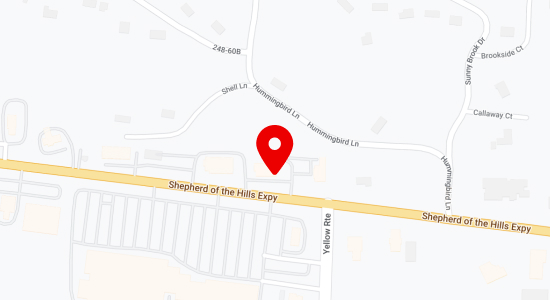
Please note that our law firm's address is for mail correspondence only. We do not accept in-office visits to this location. To schedule an appointment or consult with an attorney, please contact us via phone or email. Our contact information is readily available on our website. We look forward to hearing from you and strive to supply efficient and accessible legal services to our clients.
Ste Q, #451
Branson, MO 65616