- Contact Us Now: (417) 699-0074 Tap Here to Call Us


What Is the Difference Between Theft, Burglary, and Robbery in Missouri?


Stealing, burglary, and robbery are related criminal offenses, but Missouri law does not treat them as interchangeable labels. Stealing generally concerns taking or retaining another person’s property with the required intent. Burglary emphasizes unlawful entry or remaining in a particular place with criminal purpose. Robbery involves forcible stealing, with the degree determined by additional conduct or harm. The facts needed to prove one offense may be absent from another.
These distinctions shape both the charges and a possible defense. Police may collect property records, surveillance video, messages, witness descriptions, and photographs of an entry point. A disagreement over permission to enter, an alleged threat, or the timing of someone’s intent can change the analysis considerably. A person accused after an incident at a Branson store or lodging property should not assume that every property accusation has the same consequences.
Scrivner Law Firm defends clients facing criminal allegations in Taney, Stone and Christian counties and throughout Southwest Missouri. Attorney Dayrell Scrivner has extensive legal experience, including approximately two decades working as a prosecutor, which informs his approach to examining charging decisions, assessing competing accounts, and identifying the specific elements the state must establish.
Start With the Conduct, Not the Label in a Police Report
Missouri Revised Statutes section 570.030 defines stealing through several routes, including appropriating another person’s property or services with the purpose to deprive the owner, without consent or through deceit or coercion. Receiving, retaining, or disposing of property known or believed to be stolen can also fall within the statute. The text requires more than a bare assertion that an object was missing, and the applicable penalties may depend on the type and value of property.
For example, a customer accused of leaving a shop without paying may dispute whether there was an intent to deprive the seller. A business transaction may involve consent, confusion over payment, or a genuine disagreement about ownership. None of those explanations automatically defeats a charge, but they point to evidence prosecutors should examine. Receipts, payment records, return policies, security footage, and statements made at the time may be more informative than a later accusation.
Burglary has a different core. Under section 569.170, second-degree burglary includes knowingly entering or remaining unlawfully in a building or inhabitable structure for the purpose of committing a crime inside. The statute also contains provisions concerning certain unlawful vehicle entries and restricted commercial areas. First-degree burglary under section 569.160 adds specified aggravating circumstances. The central point is that unlawful entry with criminal purpose can establish burglary even when nothing is successfully taken.
Robbery requires attention to force as defined by the relevant statutes. First-degree robbery under section 570.023 involves forcible stealing plus enumerated aggravating circumstances, such as serious physical injury or the presence or threatened use of a deadly weapon in the specified manner. Second-degree robbery under section 570.025 requires forcibly stealing and causing physical injury. A mere dispute about possession does not establish either robbery offense without the necessary statutory proof.
How an Unlawful Entry Can Become Burglary Without a Theft
A common misconception is that burglary means stealing from a house. Missouri law can reach unauthorized entry into a qualifying building or structure with the purpose of committing another crime there, even when no property is actually removed. A person might be accused of entering to commit an assault or another offense. Prosecutors still need evidence of the required purpose and unlawful entry or remaining; discovering a defendant inside a building does not automatically answer both questions.
Permission is often contested. A person may have been invited inside, used a door commonly open to customers, or reasonably believed an employee authorized access. The scope of any permission matters. Entry into a public lobby does not necessarily authorize access to an employee-only storage area, while a property owner’s later change of mind does not automatically establish what the visitor knew when entering. The factual chronology should be compared with the exact statutory subdivision charged.
An allegation may also depend on when criminal purpose formed. If someone entered lawfully and only later became involved in a dispute, the prosecutor’s burglary theory may involve a claimed decision to remain unlawfully with the necessary purpose. Evidence from cameras, access records, witnesses, and messages can help distinguish an initial plan from something that occurred after arrival. The law requires analysis of the defendant’s mental state, not just a retrospective account of an unpleasant result.
The statutory grading matters. First-degree burglary carries more serious exposure than second-degree burglary, and aggravating elements must be independently established. Under section 569.160, the presence of another person who was not a participant, certain weapon circumstances, or immediate threats of injury may affect the charge. Defense counsel should determine exactly which aggravator is claimed and what evidence shows its occurrence during the entry, presence in the structure, or immediate flight.
When a Property Dispute Crosses Into Robbery
Robbery is not simply theft of expensive property. It is an offense tied to forcible stealing and, under the current Missouri first- and second-degree provisions, additional conduct or injury. A witness may describe a frightening incident, but the prosecution must identify what force or threat allegedly occurred and how it relates to the taking or retention of property. The timing of actions can become important when an encounter develops over several minutes.
Suppose someone is accused of taking merchandise and an altercation follows near an exit. Video might show whether physical contact preceded, accompanied, or followed the alleged taking; who initiated a confrontation; and whether the accused intended to keep the property. A description such as ‘shoplifting turned violent’ does not itself establish first-degree or second-degree robbery. Injury documentation, testimony, and the statutory definition of forcible stealing should be analyzed together.
Weapons allegations deserve special scrutiny. First-degree robbery may involve a real deadly weapon, an apparent weapon, or other qualifying threats specified in section 570.023. Those categories have distinct language. A hand placed inside a pocket, an ambiguous gesture, or a witness’s assumption must be considered against the precise element charged. The defense may challenge identification, the manner of display, or the inference that an object was used or threatened as alleged.
Second-degree robbery specifically includes causing physical injury during forcible stealing. An allegation of contact alone should not end the inquiry into physical injury, causation, and the relationship to the supposed theft. The police may rely on photographs, medical descriptions, or witness accounts. Defense counsel should request the underlying materials and determine whether the record supports the statutory requirement, while also considering that a prosecutor could allege additional charges arising from the same confrontation.
Value, Degree, and the Risks of Overgeneralizing Penalties
Stealing penalties under section 570.030 are not determined by one fixed dollar amount in every case. The statute differentiates among categories of property, valuation thresholds, and other circumstances. Items such as firearms, certain controlled substances, or other specially identified property can raise issues that do not arise in a routine retail allegation. It would be misleading to characterize every low-value accusation as merely a ticket or every higher-value accusation as the same felony.
Value may be disputed. Original retail price, used-condition value, replacement cost, and documented transactions can provide different perspectives, while the statutory rules determine which measurements matter. Investigators should identify the particular property and proof of value, not rely on a store employee’s estimate without examination. For services or intangible property, records and definitions may be especially important. Expert analysis is not necessary in every case, but unsupported assumptions can affect grading.
Burglary and robbery can involve serious felony classifications regardless of whether the property ultimately changes hands. First-degree burglary is a class B felony under section 569.160, and first-degree robbery is a class A felony under section 570.023. Second-degree robbery is a class B felony under section 570.025. Second-degree burglary has its own grading rules, including distinctions depending on the statutory route and circumstances. The official charge and current statute govern exposure.
Consequences can extend beyond a sentence. A property-crime conviction may affect job screenings, professional credentials, housing applications, and the person’s reputation. The exact disposition matters, and not every charge is eligible for the same later relief. A plea to an offense sounding less serious in ordinary conversation can still carry significant consequences. Defendants should understand what facts they would admit and how the record could be used in future proceedings.
Defense Evidence Often Turns on Timing and Authorization
A useful investigation asks who owned the property, who had authority to enter, what the accused understood, and when any force occurred. These are separate inquiries. A receipt might support consent to a transfer but say little about an unauthorized entry. A door-access record might identify a visitor but not prove that person planned a crime. A medical record might document an injury without establishing who caused it during a theft.
Branson hotels, retailers, parking facilities, and other commercial sites may preserve surveillance for limited periods. Access logs, transaction histories, employee schedules, booking records, and dispatch recordings may also matter. Early preservation requests can be worthwhile. Police summaries may omit an angle of video or rely on selected witness quotations; obtaining original recordings can help reconstruct the incident and avoid drawing conclusions from a single still image.
Identification is another possible issue. Crowded settings, poor lighting, inconsistent clothing descriptions, and mistaken vehicle associations can affect the reliability of eyewitness testimony. If several people were present, counsel should distinguish an individual’s alleged conduct from actions attributed generally to a group. Participation and mental state cannot be established by association alone. At trial the prosecution must prove the charged offense beyond a reasonable doubt.
Constitutional questions may arise if police searched a vehicle, phone, room, or belongings. Whether a warrant, consent, or recognized exception permitted the search depends on the circumstances. Challenging improperly obtained evidence is distinct from arguing that the evidence proves a different offense. Both may be necessary in a case involving property records, digital messages, or objects seized after a stop. Each proposed motion should be tied to the actual record.
What a Southwest Missouri Defendant Should Expect
Allegations arising near Branson may be investigated locally and prosecuted in Taney County within Missouri’s Forty-Sixth Judicial Circuit. The specific forum depends on the charge and charging authority. Proceedings can include an initial appearance or arraignment, discovery, motion practice, negotiations, and possibly trial. A person should pay careful attention to the charging document because an informal label in an arrest report may differ from the statutory offense later filed.
Conditions of release, orders involving alleged victims or witnesses, and scheduled appearances can create immediate responsibilities. A defendant should not attempt to resolve disputed allegations through direct pressure on a complainant or an agreement that conflicts with a court order. Counsel can evaluate the strength of the case, explain deadlines, and address preservation or witness-contact issues through lawful channels.
There is no single defense that applies to stealing, burglary, and robbery alike. The strongest question in one case may be intent to deprive; in another it may be permission to enter; in a third it may be the proof of forcible stealing or injury. Comparing the allegations with the elements can reveal unsupported assumptions, improperly added charges, or a need for further investigation.
A careful review should also consider possible multiple counts. A single incident can prompt prosecutors to allege more than one offense, but overlap does not eliminate constitutional and statutory limits concerning convictions or punishment. Whether separate crimes can be charged or punished together depends on the actual elements and conduct. Counsel should examine those questions rather than assume a property dispute will be resolved under only one section.
Property Crime Charges Can Threaten Your Future. Scrivner Law Firm Can Help Protect It.
A stealing, burglary, or robbery accusation may escalate while police review surveillance, interview employees or residents, investigate property value, and consider whether a force or unlawful-entry theory is supported. Different investigators may describe the same event in different terms. Legal assistance at an early stage can help preserve useful records, identify which facts are genuinely disputed, and make sure the defense addresses the actual charge.
Attorney Dayrell Scrivner brings former prosecutorial experience and criminal defense work to evaluating property offenses in Taney, Stone and Christian counties. If you are under investigation or have been charged, contact Scrivner Law Firm to discuss how Missouri’s distinct statutes apply to your circumstances and what evidence deserves attention. Arrange a private consultation with the firm to begin addressing the accusation.
OUR ADDRESS
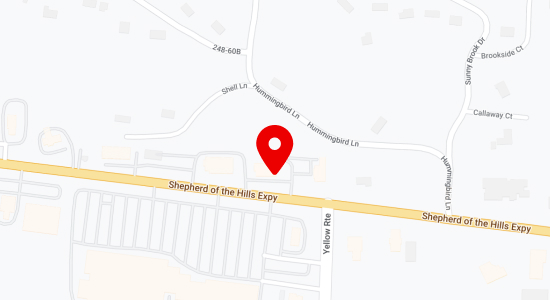
Please note that our law firm's address is for mail correspondence only. We do not accept in-office visits to this location. To schedule an appointment or consult with an attorney, please contact us via phone or email. Our contact information is readily available on our website. We look forward to hearing from you and strive to supply efficient and accessible legal services to our clients.
Ste Q, #451
Branson, MO 65616