- Contact Us Now: (417) 699-0074 Tap Here to Call Us


What Happens If You Violate Probation in Missouri?


An alleged probation violation in Missouri does not automatically mean that probation will be revoked. A court can respond in different ways depending on the condition allegedly violated, the evidence, the defendant’s history on supervision, the underlying offense, and the sentencing options available. Missouri law allows a court in appropriate circumstances to continue probation, modify or enlarge conditions, extend the term within statutory limits, use certain Department of Corrections programs, or revoke probation and impose further consequences.
That range of outcomes makes the violation process important. A missed appointment, failed test, unpaid obligation, unauthorized travel, or new arrest can raise different legal and factual questions. The court must determine whether a violation occurred and, if so, whether revocation is warranted. Records from probation officers, testing providers, treatment programs, employers, medical providers, witnesses, or the new criminal case may become important to that decision.
Scrivner Law Firm represents people facing criminal charges and probation-related proceedings in Taney, Christian and Stone counties. Attorney Dayrell Scrivner has more than three decades of legal experience, including extensive service as a prosecutor and chief assistant prosecutor. His background in criminal procedure and sentencing can be useful when evaluating what the alleged violation means, what evidence supports it, and what alternatives may be available.
Technical Violations and New Criminal Allegations Are Different
Probation conditions can require a person to report to a supervision officer, maintain lawful behavior, complete treatment, submit to testing, pay ordered amounts, avoid certain people or places, or satisfy other individualized requirements. A technical violation generally concerns a failure to comply with a condition rather than the commission of a new crime.
A new arrest raises a different issue. Probation often requires the defendant to obey the law, so an allegation of new criminal conduct can become the basis for a violation proceeding. But an arrest is not the same as a conviction. The probation court may consider evidence of the alleged conduct under the standards applicable to revocation even while the new criminal charge remains unresolved.
That distinction matters strategically. Statements made in the probation case, testimony at a violation hearing, or evidence disclosed through supervision can also affect the new criminal prosecution. Counsel may need to coordinate the defense of both matters rather than treating them as separate problems.
How a Violation Proceeding Can Begin
Missouri law permits the prosecuting or circuit attorney to file a motion to revoke probation. The court can also act on an alleged violation and may issue notice requiring the probationer to appear. In appropriate circumstances, the court may issue a warrant for the defendant’s arrest.
The filing of a motion to revoke does not itself prove the violation. It starts a process in which the allegation must be addressed. The motion may identify one incident or several alleged failures, and the defense should compare those allegations with supervision records and the actual terms of probation.
A warrant can create immediate practical consequences. A defendant may be taken into custody, employment and treatment can be disrupted, and the court may need to decide detention or release while the violation is pending. Promptly obtaining the motion, docket entries, and probation conditions helps define what must be answered.
Probation Can Be Suspended While the Violation Is Pending
A pending violation can also affect the running of the probation term. Section 559.036 allows the court, after the prosecutor files a motion to revoke or on the court’s own motion, to suspend the probation period while the violation is being resolved. The statute provides that the term is tolled during that suspension, although the court may later grant credit for some or all of the tolled period when probation is reinstated.
The court’s authority can also extend beyond the scheduled expiration of probation for a reasonably necessary period to decide matters that arose before expiration when the statutory conditions are satisfied. That makes it risky to assume a violation disappears merely because the original end date is approaching. The docket should be reviewed to determine whether the court took timely action and what effect any suspension order has on the remaining term.
The statute also addresses counsel in revocation proceedings. A probationer may have the right to request appointed counsel when unable to retain counsel, with the court determining whether counsel is necessary to protect due-process rights in the circumstances.
Notice and an Opportunity to Be Heard
Section 559.036 of the Revised Statutes of Missouri provides that probation may not be revoked without notice and an opportunity to be heard on whether the defendant violated a condition and, if so, whether revocation is warranted under all the circumstances.
Those are two related but distinct questions. First, did the alleged conduct occur and did it violate an actual condition of probation? Second, even if a violation is established, is full revocation the appropriate response? The defense can present evidence relevant to both.
For example, a missed appointment may have resulted from hospitalization, transportation problems, a documented scheduling mistake, or confusion about instructions. A positive test may raise questions about collection, chain of custody, prescription medication, or confirmation testing. An alleged failure to complete treatment may need to be compared with attendance records and program communications. The facts matter.
What Evidence the Court May Consider
Probation-revocation proceedings are not identical to a jury trial on a new criminal charge. The evidentiary and procedural framework differs, and the court has a significant role in evaluating reliable information concerning compliance with probation. The defense should nevertheless examine the source and quality of the evidence rather than accepting a probation report as self-proving.
Useful material can include supervision notes, sign-in records, payment records, testing documentation, treatment records, employment schedules, travel permissions, text messages, emails, medical documents, and witness testimony. If a new offense is alleged, police reports, video, photographs, statements, or other evidence from that case may also matter.
A detailed timeline can be especially helpful when the alleged violation involves repeated conduct. It can show when instructions were given, what the defendant did in response, and whether supervision personnel were aware of circumstances that explain the event.
Continuing Probation Without Revocation
Missouri law allows a court to continue a defendant on existing probation conditions after a violation. The court may determine that continued supervision remains appropriate when the conduct, overall performance, and objectives of probation do not justify revocation.
Continuation can be significant when the defendant has otherwise complied for a substantial period, quickly corrected the problem, maintained work or treatment, or has credible documentation explaining the incident. None of those circumstances guarantees a particular result, but they can be relevant to the court’s discretionary decision.
A defense presentation may therefore focus not only on disputing the alleged violation but also on showing why continued probation would address the problem without imposing the consequences of revocation.
Modifying or Extending Conditions
Section 559.036 also permits the court, in appropriate circumstances, to modify or enlarge probation conditions or extend the probation term within statutory limits. A court might respond to a problem by requiring additional treatment, tighter reporting, monitoring, or another condition rather than ending probation completely.
Modification is not necessarily minor. New conditions can affect work schedules, transportation, finances, family responsibilities, and daily life. The defendant should understand exactly what the court orders and obtain clarification when a condition is unclear.
An extension means supervision can continue longer. Missouri law limits probation terms and extensions, so counsel may need to determine how much time has already been served, whether the period was suspended, and what statutory authority exists for the proposed extension.
Department of Corrections Programs
For certain eligible defendants, Missouri law provides for placement in a Department of Corrections one-hundred-twenty-day program instead of immediate full revocation when the statutory requirements are met. Eligibility depends on the underlying offense and other statutory limitations, and the Department determines placement in the particular structured intervention or treatment program based on its assessment.
This option should not be described as automatically available to every probationer. Some offenses are excluded, and the court may make findings affecting eligibility in circumstances identified by statute. Successful completion can lead to release back to probation under the statutory framework.
If the Department reports an unsuccessful program exit, further proceedings can follow. The sentencing court may then have authority to modify, enlarge, or revoke probation based on the same incident as permitted by law.
Full Revocation and Sentencing Exposure
Revocation is the most serious probation response. What happens after revocation depends in part on the sentence originally imposed. A defendant who received a suspended execution of sentence is in a different posture from someone who received a suspended imposition of sentence or another disposition. The judgment and sentencing record must be reviewed carefully.
The court may have authority to order execution of an existing sentence or impose a sentence within the lawful range, depending on the original case and disposition. The underlying offense therefore remains central even when the immediate dispute concerns only probation conduct.
Counsel should obtain the original judgment, sentencing order, probation conditions, and any prior modification orders before advising the defendant about revocation exposure. Memory about what happened at the original plea or sentencing is not a reliable substitute for the court record.
A New Arrest Does Not Automatically Prove a Violation
A person on probation may be arrested for a new offense before the new case has been tried. The probation court can still address the alleged conduct, but the defense should distinguish between the fact of arrest and evidence that a prohibited act actually occurred.
Police may later amend a report, witnesses may change accounts, video may contradict an allegation, or a prosecutor may decline or reduce the new charge. At the same time, waiting for the new criminal case to end is not always required before the probation court acts.
This creates strategic tension. The defendant may want to contest the violation while also avoiding statements that could harm the defense in the new prosecution. Coordinated legal advice is important when the same incident drives both cases.
Preparing for a Probation-Violation Hearing
Preparation begins with the written conditions of probation and the motion or notice identifying the alleged violation. The defense can then gather records, identify witnesses, review the supervision history, and determine whether the State’s evidence accurately describes what happened.
Positive compliance history can matter. Completed treatment, negative tests, steady employment, restitution payments, educational progress, family responsibilities, and successful periods of supervision may help place a single violation in context. When a problem is ongoing, evidence that the defendant has already taken corrective action can also be relevant.
The goal is to give the court a reliable factual picture and a legally grounded alternative when revocation is not necessary.
Speak With Scrivner Law Firm About a Missouri Probation Violation
A probation allegation can become complicated quickly. A probation officer may be documenting noncompliance, the prosecutor may seek revocation, the court may issue a warrant, and a new criminal accusation may proceed at the same time. Early defense involvement can help identify the exact conditions, preserve records, evaluate the violation evidence, and present lawful alternatives to full revocation when the facts support them.
Attorney Dayrell Scrivner brings decades of legal experience, including extensive prosecutorial and criminal-law experience, to defending people in Southwest Missouri. If you are facing a probation-violation allegation in Taney, Christian and Stone counties, contact Scrivner Law Firm to discuss the claimed violation, the hearing process, and the possible outcomes. Call the firm or submit the online contact form to schedule a consultation.
OUR ADDRESS
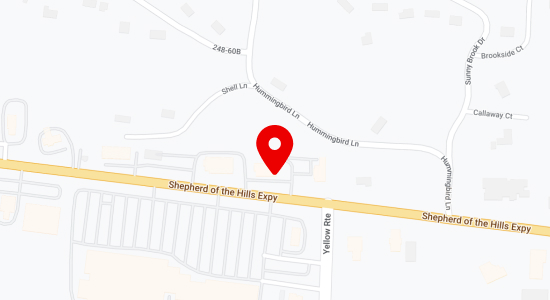
Please note that our law firm's address is for mail correspondence only. We do not accept in-office visits to this location. To schedule an appointment or consult with an attorney, please contact us via phone or email. Our contact information is readily available on our website. We look forward to hearing from you and strive to supply efficient and accessible legal services to our clients.
Ste Q, #451
Branson, MO 65616