- Contact Us Now: (417) 699-0074 Tap Here to Call Us


What Happens If You Plead Not Guilty in Missouri?


Pleading not guilty to a criminal charge in Missouri means that a defendant is not admitting the offense and is preserving the opportunity to contest it. The plea is not a decision by the judge that the charge is false, nor does it necessarily mean a trial will occur. Instead, the case enters a phase in which evidence, procedural questions, and possible resolutions can be considered.
The next steps can be unfamiliar to someone appearing in court for the first time. The judge may address release conditions and scheduling; prosecutors may disclose evidence; and the defense may investigate witnesses, seek additional records, or raise legal motions. Negotiations can continue after a not-guilty plea. Each decision depends on the actual charge, the available facts, and the possible consequences.
Scrivner Law Firm represents defendants in Taney, Stone and Christian counties and throughout Southwest Missouri. Attorney Dayrell Scrivner brings decades of legal experience, including approximately two decades as a prosecutor, to evaluating criminal accusations, reviewing the state’s proof, and helping clients understand court procedures and their available options.
Arraignment Is the Beginning, Not a Finding of Guilt
An arraignment concerns the formal accusation and the defendant’s plea. Missouri Supreme Court Rule 24.01 addresses arraignment procedures, while Revised Statutes section 546.020 provides for a not-guilty plea in circumstances where the defendant denies a charge or does not confess it. These provisions reflect an important point: entering a not-guilty plea preserves a contested case; it does not impose a requirement that the defendant immediately prove innocence.
A person may enter that plea while still learning what evidence prosecutors intend to use. An arrest report may not describe all witnesses or documents. A prosecutor’s formal charges might also differ from what officers initially said at the scene. The defendant and counsel should read the actual information or indictment, identify every count, and determine whether penalties or enhancement allegations depend on prior convictions.
Court events vary by the seriousness of the offense and procedural history. A misdemeanor case may follow a different path from a felony proceeding that involves preliminary stages. For an arrest in Branson, state charges may be heard in Taney County within Missouri’s Forty-Sixth Judicial Circuit, with circuit court offices in Forsyth. The specific courtroom and appearance requirements should be confirmed through official notices.
Release conditions do not become optional because the plea is not guilty. A judge may impose obligations relating to court appearances, travel, contact with witnesses or complainants, or other conduct. A violation can create additional problems even before the original allegation is resolved. Counsel can explain the written conditions, seek an appropriate modification, and help the defendant avoid relying on informal assurances.
Discovery Changes What Both Sides Know About the Case
Discovery is the procedure through which relevant evidence and information are disclosed under the applicable rules. Missouri Supreme Court Rule 25.03 addresses important state disclosures in criminal cases. Depending on the allegation, those materials may include police reports, witness statements, recordings, photographs, lab results, and expert information. The rules and court orders determine the timing and scope; discovery is not necessarily a single packet delivered at one hearing.
A police report is usually a starting point rather than the entire evidentiary record. An officer may summarize a witness’s statement, while the original recording contains additional qualifications or context. A video might reveal the sequence of a stop or show only part of an encounter. Defense counsel should compare documents with underlying evidence, identify contradictions, and determine whether information required for a fair trial has been disclosed.
Time-sensitive evidence deserves early attention. Security-camera systems may overwrite footage, third-party businesses may not preserve records indefinitely, and witness memories change. The defendant can help by providing an accurate chronology and identifying possible sources of information. Attempting to contact witnesses in violation of a court order or deleting communications after learning of an investigation may create new legal problems.
The defense may also need to consider reciprocal discovery duties, privileged material, and expert consultation. The fact that prosecutors must disclose specified information does not entitle either side to ignore procedural rules. An attorney can determine whether further requests or court orders are needed, what evidence supports a defense, and which parts of the state’s theory remain unsupported.
Pretrial Motions Address Legal Issues Before Trial
A pretrial motion asks the judge to resolve a particular legal question. In some cases, defense counsel may challenge a search, seizure, or custodial statement. In others, the issue concerns the charging document, a disclosure dispute, identification evidence, or the treatment of proposed testimony. The appropriate motion depends on a concrete factual and legal basis; a not-guilty plea does not automatically create grounds to suppress evidence.
Suppose police obtained material from a vehicle or telephone. Counsel may examine whether officers had a warrant, consent, or another lawful basis and whether the search stayed within permitted bounds. A defect concerning one item does not necessarily require dismissal of the entire prosecution. The remedy depends on the violation, the evidence affected, and the relationship between that evidence and the charge.
A judge may hear witnesses or review exhibits before deciding a motion. Testimony at a suppression hearing can clarify what the officer observed, what was communicated, and when events occurred. Even when a motion is denied, the proceedings may help identify disputed facts for trial. The defendant should understand that an adverse ruling is not itself a verdict on the criminal accusation.
Some issues concern how charges are tried together or what instructions the jury may receive. Other questions may arise only after discovery is complete. Thoughtful motion practice prioritizes disputes that could affect admissibility, trial fairness, or the government’s ability to establish a required element. Filing numerous unsupported motions is not a substitute for careful investigation.
Plea Discussions Can Continue After a Not-Guilty Plea
Negotiations often remain possible after arraignment. A prosecutor might offer an amended charge, a sentencing recommendation, or another disposition. The defendant can evaluate or decline an offer and retain the opportunity to contest the case. Neither the existence of an offer nor the act of discussing it is a concession that the state’s case has been proved.
The consequences of a proposed resolution require close attention. A guilty plea may involve fines, probation, incarceration, restitution, or conditions tied to the offense. It may also affect a driver’s license, a professional credential, immigration status, or future criminal-record checks. These collateral effects do not necessarily appear in the first sentence of an offer. Counsel should identify which results are likely and which remain uncertain.
A defendant considering a plea must understand the rights that would be waived and the factual basis for the admission. Missouri’s plea procedures require attention to voluntariness and informed choice. The court’s role at a plea hearing differs from the informal discussions between counsel and prosecutor. A rushed agreement can have consequences that outlast the immediate courtroom proceeding.
Rejecting a plea agreement does not guarantee acquittal, just as accepting one is not automatically the best decision because it avoids trial. The strength of the evidence, the legally supported penalties, the client’s objectives, and the availability of defenses all matter. Reviewing discovery before making an irreversible choice can be especially important when the defendant initially knows only the arresting officer’s description.
Trial Requires the State to Prove Specific Elements
At trial, the government must prove the charged offense beyond a reasonable doubt. The defendant is presumed innocent and generally is not required to testify or supply a complete alternative explanation. The statutory elements are offense-specific. For example, driving while intoxicated under section 577.010 raises different questions from stealing under section 570.030 or unlawful firearm possession under section 571.070.
The parties may present admissible exhibits, question witnesses, and raise objections governed by the rules of evidence. Cross-examination can explore inconsistencies, perception, memory, and motivation. Jury instructions explain the legal requirements the fact finder must apply. A strong trial strategy addresses those requirements directly rather than focusing only on whether a defendant appears sympathetic.
Some cases involve a recognized justification or other defense with particular procedural requirements. Counsel should identify these issues and any notice obligations before trial. A defendant who has evidence supporting self-defense, for example, may need to present a different factual and legal analysis from someone challenging identity or intent. The legal theory should be matched to the charge and the record.
If the prosecution fails to prove its case, an acquittal can result. A guilty finding can lead to sentencing and possible post-trial proceedings. Neither outcome can be guaranteed in advance. Preparation includes realistic discussion of potential penalties and the consequences of a conviction, including those imposed by other agencies or arising under separate laws.
Practical Steps Between Court Dates
A defendant should keep the summons, bond papers, charging documents, and all other court notices together. The case number, courtroom location, and appearance instructions deserve attention. If travel or work creates a conflict, counsel should be notified promptly. Simply missing court can lead to consequences separate from the criminal accusation.
Make a private timeline describing the incident as accurately as possible. Note possible witnesses, messages, purchases, locations, and available recordings. Share the information with counsel rather than attempting to litigate the case on social media. Public posts may be used as evidence, and reaching out to an alleged victim or witness could conflict with a no-contact condition.
Ask which deadlines are urgent. In a DWI case there may be a separate licensing notice requiring prompt action; in an assault case a protection order may remain in force. A criminal court date does not necessarily suspend those other obligations. Keeping the processes separate and coordinated helps avoid accidental violations.
An organized case file also makes meetings with counsel more useful. Instead of relying solely on memory, the defendant can identify what documents were received, which questions need answers, and what new evidence has appeared. This does not replace legal advice; it gives the defense a more reliable factual foundation.
Uncertainty can persist as motions and discovery proceed. The practical goal is not to predict every court decision, but to identify the next obligation, preserve relevant material, and evaluate each choice with accurate information. A not-guilty plea leaves those choices open while the court process continues.
Preparing for counsel meetings can include reviewing whether witnesses may need subpoenas, whether records should be requested from businesses, and whether a proposed agreement would affect another pending matter. These are not tasks the defendant must perform alone. Counsel can make appropriate requests and explain when the court must authorize a step. The practical advantage is a more informed decision when the next hearing arrives, rather than a rushed response to information first disclosed in the courtroom. The defendant can also ask what information remains unavailable and when an answer is expected.
Take the Next Step in Your Criminal Defense With Scrivner Law Firm
A criminal case can grow more complicated while prosecutors disclose evidence, police locate witnesses, and the court sets deadlines for motions and hearings. Pleading not guilty preserves the chance to challenge the allegations but does not itself investigate the facts or resolve other restrictions. Early defense involvement may help identify critical evidence and avoid missed procedural opportunities.
Attorney Dayrell Scrivner brings former-prosecutor experience and criminal defense practice to Missouri cases. If you have entered a not-guilty plea or are preparing for arraignment in Taney, Stone or Christian counties, contact Scrivner Law Firm to discuss the accusations, available evidence, and your next steps. Request a private consultation to prepare for the proceedings ahead.
OUR ADDRESS
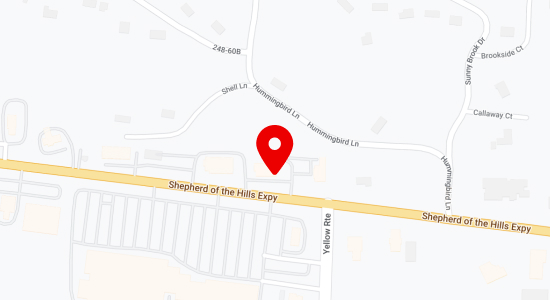
Please note that our law firm's address is for mail correspondence only. We do not accept in-office visits to this location. To schedule an appointment or consult with an attorney, please contact us via phone or email. Our contact information is readily available on our website. We look forward to hearing from you and strive to supply efficient and accessible legal services to our clients.
Ste Q, #451
Branson, MO 65616