- Contact Us Now: (417) 699-0074 Tap Here to Call Us


What Happens After You Are Arrested in Missouri? A Step-by-Step Guide


An arrest in Missouri begins a criminal process; it does not determine guilt and it does not necessarily tell you what charges will ultimately be filed. After an arrest, law enforcement may book and hold a person, a court may address release conditions, and a prosecutor may decide what formal charges to pursue. The path can differ depending on whether the accusation is a misdemeanor or felony, whether a warrant already existed, whether the person remains in custody, and whether the case is filed in state or municipal court.
Those distinctions matter because decisions made immediately after an arrest can affect release, evidence, statements, court obligations, and the defense strategy. Police reports may still be developing, laboratory testing may not be complete, witnesses may be interviewed again, and prosecutors may change or refine the allegations. A defendant also faces deadlines and conditions imposed by the court, and violating a release condition or missing a required appearance can create additional problems before the underlying case is resolved.
Scrivner Law Firm represents people accused of crimes in Branson and throughout Taney, Christian and Stone counties. Attorney Dayrell Scrivner has more than three decades of legal experience, including extensive service as a prosecutor and as a chief assistant prosecutor. He has also taught criminal law and criminal procedure in Missouri, experience that can help when evaluating what the State is doing at each stage and what issues the defense should address early.
Booking and Detention Come Before the Case Is Fully Developed
After an arrest, officers generally transport the person to a jail or detention facility for booking. The booking process commonly includes confirming identity, recording the alleged offense, photographing and fingerprinting the person, inventorying personal property, and checking for warrants or other holds. These administrative steps do not mean that every allegation in an officer’s report has been accepted as a formal charge.
The length and circumstances of detention vary. Some people may be released under existing procedures or conditions, while others remain in custody until a judge addresses release. If the arrest occurred on a warrant, the warrant itself may contain conditions or an amount of bond. In other cases, release decisions may be addressed after the arrest based on the charge, the defendant’s circumstances, and the court’s assessment of appearance and safety concerns.
A defendant should also understand that conversations at the jail can create evidence. Statements to officers, recorded jail calls, messages sent through jail systems, or conversations with others may later become relevant. The right to remain silent is therefore not limited to a formal interrogation room.
The Court Addresses Release and Conditions
Missouri Supreme Court Rule 33 governs release in misdemeanor and felony cases. For a bailable offense, the rule starts from a right to release pending further proceedings. The court considers whether ordinary release will reasonably secure the defendant’s future appearance and the safety of the community or other people. If additional conditions are necessary, the rule directs the court to use the least restrictive condition or combination of conditions reasonably necessary for those purposes.
Conditions may be nonmonetary, monetary, or a combination. Depending on the case, they may restrict travel or contact, require reporting, impose monitoring or testing, or establish a bond. The court may also order detention when the applicable standard for detention is met. The precise release decision is case specific, not a fixed consequence that follows automatically from the name of the charge.
Once released, the defendant must take the conditions seriously. Contact restrictions, testing requirements, travel limits, reporting obligations, or other conditions remain court orders even if the defendant believes the underlying accusation is false. A violation may lead to a warrant, modification of release, or detention while the original criminal case is still pending.
The Initial Appearance Explains the Charge and Core Rights
An initial appearance is an early court proceeding, not a trial. Missouri rules require the court to inform a defendant of the charge and important rights. In felony cases, a defendant arrested and confined under an initial warrant is brought before the issuing court for the initial appearance under the felony rules. Misdemeanor procedure similarly provides for an initial appearance and advisement of rights.
At this stage, the court may explain the right to retain counsel, the ability to request appointed counsel when financially eligible, and the right to remain silent. The court may also address release conditions. The purpose is to establish the defendant’s status in the case and make sure the person understands the accusation and immediate procedural rights.
The evidence is usually not fully litigated at the initial appearance. A defendant may not yet have all police reports, recordings, laboratory results, photographs, or witness statements. That is one reason an early court appearance should not be confused with a final assessment of the strength of the case.
Charging Decisions Can Change What the Case Looks Like
Law enforcement makes arrests, but prosecutors decide what criminal charges to file and pursue on behalf of the State. The prosecutor may review reports, recordings, witness accounts, physical evidence, and applicable statutes before deciding whether the facts support the offense initially suspected by police, a different offense, multiple counts, or no charge at all.
Felony proceedings may begin through a complaint or indictment. Formal prosecution later proceeds through an indictment or information as provided by Missouri criminal procedure. Misdemeanor cases are also prosecuted through formal charging instruments. The charging document matters because it identifies the offense the State must prove and frames the allegations the defense must answer.
The filed charge may differ from the offense listed at booking. Additional investigation can lead to amendments or new counts when permitted by law, while evidentiary weaknesses can lead the prosecution to reduce or dismiss allegations. Defense counsel therefore examines both the arrest facts and the actual charging instrument rather than treating the booking label as the final word.
Arraignment Requires a Plea to the Formal Charge
Arraignment is a distinct stage from the initial appearance. Under Missouri procedure, arraignment occurs in open court and involves stating or reading the indictment or information and calling on the defendant to plead. The plea may be not guilty, guilty, or another plea recognized by law, depending on the circumstances.
In a contested criminal case, a not-guilty plea ordinarily moves the case into pretrial litigation rather than ending it. The defense can then continue investigating, obtain discovery, evaluate motions, and prepare for negotiation or trial. The arraignment itself does not require the defense to reveal its entire strategy or prove innocence.
The timing and format of proceedings can differ by case and court. In some situations, procedural stages may occur close together. What matters is understanding what action the court is taking, what deadlines follow, and what obligations the defendant has after the hearing.
Discovery Shows What Evidence the State Intends to Use
Discovery is the process through which the parties obtain information relevant to the prosecution and defense. Missouri criminal discovery rules require disclosure of specified categories of material, including certain witness statements, reports, expert material, and other evidence within the State’s possession or control when the governing rules require disclosure.
In a Branson or Taney County case, discovery may include body-camera footage, dash-camera video, dispatch records, photographs, recorded interviews, laboratory reports, digital evidence, medical material, or documents gathered during a search. The particular evidence depends on the accusation.
Reviewing discovery is more than reading the police narrative. Counsel may compare reports to video, test witness accounts against timestamps or physical evidence, examine whether searches and seizures were lawful, and identify missing material that should be requested or preserved. Evidence that appears straightforward in a short probable-cause statement may look different when the underlying recordings and records are examined. Counsel can also compare the timing of disclosure with upcoming hearings and identify whether additional requests are necessary. Organizing discovery by source and issue can reveal contradictions that are easy to miss when each report is considered separately.
Pretrial Motions Can Shape What Evidence Reaches Trial
Before trial, the defense may file motions addressing constitutional, evidentiary, or procedural issues. A motion to suppress may challenge evidence obtained through an unlawful search, seizure, or interrogation. Other motions may address the sufficiency of the charging instrument, discovery disputes, admissibility questions, or other issues that should be resolved before a jury hears the case.
A successful motion can substantially alter the prosecution’s proof. If critical evidence is excluded, the State may have to reevaluate the charge or its ability to proceed. A denied motion can still clarify what evidence will be admitted and help the defense prepare for trial.
Pretrial litigation is driven by the specific record. The defense needs the reports, recordings, warrant materials, witness information, and procedural history necessary to identify a legal issue and support it with facts. That work often begins well before a motion is filed.
Negotiation, Dismissal, or Trial May Follow
Not every arrest leads to a trial. A prosecutor may decline to pursue a charge, dismiss a pending charge, offer an amended charge, or negotiate a plea. A defendant may accept or reject an offer after receiving legal advice. If the parties do not resolve the case and the charge remains pending, the matter can proceed toward trial.
A plea agreement is different from a dismissal. A reduction is also different from an acquittal. Each resolution can have different effects on sentencing exposure, records, probation, collateral consequences, and future proceedings. The defense should evaluate not only the immediate punishment but also the legal consequences attached to the proposed outcome.
If the case goes to trial, the State bears the burden of proving the charged offense beyond a reasonable doubt. An arrest, charging decision, or probable-cause finding does not eliminate that burden.
Local Procedure in Branson and Taney County
State criminal matters arising in Taney County proceed in Missouri’s Forty-Sixth Judicial Circuit, with the county courthouse located in Forsyth. Branson’s Municipal Division is part of the Taney County circuit court system and handles alleged city traffic, ordinance, and parking violations. Determining which court has the case is important because the charge, prosecutor, schedule, and available procedures may differ.
A person who leaves custody should keep every court document, confirm the correct court and case number, comply with release conditions, and make sure counsel has accurate contact information. Ignoring a notice because the case appears minor can turn a manageable procedural issue into a warrant or additional allegation.
The defense can also begin preserving evidence that may disappear with time, including private surveillance video, messages, receipts, location records, photographs, and witness contact information. Early preservation can matter when the police file does not contain the entire story.
Speak With Scrivner Law Firm After an Arrest in Missouri
A criminal case can become complicated quickly after an arrest. Law enforcement may continue gathering evidence, the prosecutor may be deciding what to file, the court may impose release conditions, and deadlines may begin before the defendant has seen the full evidence. Early defense involvement can help identify the actual charge, preserve favorable material, evaluate constitutional issues, and prepare for the next court stage.
Attorney Dayrell Scrivner brings decades of legal experience, including extensive prosecutorial and criminal-law experience, to defending people in Southwest Missouri. If you were arrested in Taney, Christian or Stone counties, contact Scrivner Law Firm to discuss what happened, what has been filed, and what steps may come next. Call the firm or submit the online contact form to schedule a consultation.
OUR ADDRESS
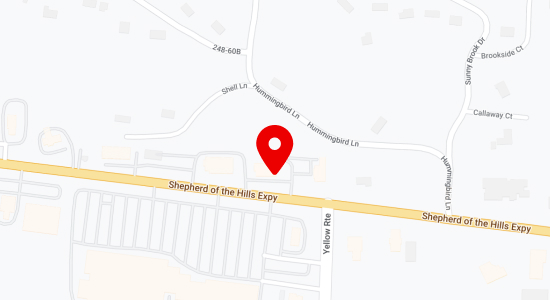
Please note that our law firm's address is for mail correspondence only. We do not accept in-office visits to this location. To schedule an appointment or consult with an attorney, please contact us via phone or email. Our contact information is readily available on our website. We look forward to hearing from you and strive to supply efficient and accessible legal services to our clients.
Ste Q, #451
Branson, MO 65616