- Contact Us Now: (417) 699-0074 Tap Here to Call Us


Can Police Search Your Car During a Traffic Stop in Missouri?


A traffic stop in Missouri does not automatically give police permission to search a vehicle. The legal authority to stop a car and the legal authority to search it are separate questions. An officer may have a valid reason to stop a driver for speeding, an equipment issue, or another traffic violation without having any basis to look through the passenger compartment, trunk, bags, or closed containers. Whether a search is lawful depends on the facts and on the particular exception to the Fourth Amendment’s warrant requirement that the officer relies on.
That distinction matters because evidence found during a vehicle search may become central to a criminal case. Drugs, weapons, stolen property, documents, phones, or other items can lead to new charges that are much more serious than the reason for the original stop. The defense may need to examine why the vehicle was stopped, what the officer observed, what was said, how long the stop lasted, whether consent was actually given, and whether the scope of any search exceeded the legal justification for it.
Scrivner Law Firm represents people accused of criminal offenses in Taney, Christian and Stone counties, and other communities in Southwest Missouri. Attorney Dayrell Scrivner has more than three decades of legal experience, including extensive service as a prosecutor and as a chief assistant prosecutor, and he has taught criminal law and criminal procedure in Missouri. That background can be useful when evaluating how a traffic stop developed into a search and whether the State can lawfully use what officers found.
When a Traffic Stop Is Lawful but a Search Is Not
The first question is whether the officer had lawful grounds to stop the vehicle. A traffic violation ordinarily provides a basis for a temporary detention while the officer addresses the reason for the stop and conducts ordinary traffic-related inquiries. That authority does not, by itself, create a general license to search the car.
A second and independent question is whether police had legal authority to search. In many vehicle-search cases, the prosecution relies on consent, probable cause, a search incident to arrest, an inventory procedure, or another recognized exception to the warrant requirement. Each theory has its own limits. If the State cannot establish a valid justification, the defense may ask the court to suppress evidence obtained through the search.
This separation is especially important in Branson and Taney County, where a traffic stop may be conducted by city police, sheriff’s deputies, or Missouri State Highway Patrol personnel. The identity of the agency does not change the constitutional analysis. The important facts are what happened before, during, and after the stop and what objective circumstances supported each expansion of the encounter.
Consent Searches Depend on What Was Actually Agreed To
Police often ask a driver for permission to search. A person may voluntarily consent even when officers do not have a warrant or independent probable cause. But consent must be evaluated carefully. A statement such as “go ahead” may be treated differently from silence, hesitation, or an ambiguous response, and the surrounding circumstances may matter when deciding whether consent was voluntary.
The scope of consent also matters. Permission to “look in the car” does not necessarily answer every question about whether officers could open every container, inspect a locked compartment, or examine a passenger’s separate property. Courts consider what a reasonable person would have understood from the exchange between the officer and the person giving consent. A person may also limit consent or attempt to withdraw it, although the legal effect depends on what occurred and whether officers by then had developed another lawful basis to continue.
Video from a patrol car or body-worn camera can be important in disputes about consent. The precise words used, the officer’s tone, the number of officers present, whether the person was already restrained, and whether the officer claimed authority to search may all affect the analysis. A police report summarizing the encounter may not capture those details.
Probable Cause and the Automobile Exception
The automobile exception permits officers to search a vehicle without first obtaining a warrant when they have probable cause to believe the vehicle contains evidence or contraband. The doctrine is tied to the reduced expectation of privacy and mobility associated with vehicles, but probable cause remains essential. An officer cannot lawfully search a car merely because the driver appears nervous or because the stop occurs in an area the officer considers suspicious.
Probable cause is evaluated from the totality of the circumstances. The prosecution may point to an officer’s observations, the smell or visible presence of suspected contraband, statements by an occupant, information from another officer, or other facts known before the search. The defense can examine whether those facts were reliable, whether they were actually known at the relevant time, and whether the officer’s conclusions were reasonable.
The scope of a probable-cause search generally follows the object of the search. If officers have probable cause to believe a particular type of evidence is somewhere in the vehicle, the permissible search may include locations or containers where that evidence could reasonably be found. That does not mean every search of every container is automatically valid. The claimed object of the search and the factual basis for probable cause remain important.
Searches After an Arrest Have Separate Limits
An arrest does not create unlimited authority to search the passenger compartment. Under Arizona v. Gant, a vehicle search incident to a recent occupant’s arrest is generally justified when the arrestee is unsecured and within reaching distance of the passenger compartment at the time of the search, or when it is reasonable to believe the vehicle contains evidence relevant to the offense of arrest.
This can matter when a driver has already been handcuffed and placed in a patrol vehicle. If officers search the car afterward, the State may need to rely on a justification other than officer safety. The nature of the arrest offense may also matter. An arrest for an offense that is unlikely to have evidence inside the vehicle presents a different issue from an arrest connected to conduct for which evidence may reasonably be in the car.
A defense analysis should therefore reconstruct the timing. When did the arrest occur? Where was the driver? Were passengers present? What offense supported the arrest? What did officers say they were looking for? A search that is described generally as “incident to arrest” may not satisfy the constitutional limits applicable to that exception.
Inventory Searches After Towing
Police may sometimes inventory a lawfully impounded vehicle. An inventory is not supposed to be a substitute for an evidence-gathering search. Its recognized purposes include documenting property, protecting an owner’s belongings, and reducing disputes about lost or stolen items. Courts therefore look at whether the vehicle was lawfully taken into custody and whether officers followed standardized procedures rather than using an inventory label as a pretext for an exploratory search.
The decision to tow can be significant. If a vehicle was safely parked or another lawful driver was available, the defense may examine the agency’s actual policy and the facts supporting impoundment. The contents of the inventory report, body-camera footage, tow records, and written departmental procedures can help show whether the search matched a genuine inventory process.
Closed containers can raise additional questions depending on the policy officers were required to follow. A standardized policy that addresses containers may support the State’s position, while discretionary rummaging without meaningful limits may support a challenge.
Passengers, Bags, and Other Property Inside the Vehicle
A traffic stop affects more than the driver. Passengers may have personal property in the vehicle, and the legal basis for searching that property can depend on why the vehicle is being searched. If probable cause supports a search for an object that could be hidden in a passenger’s bag, the automobile exception may permit examination of the container even though it belongs to someone other than the driver. Other circumstances may produce a different result.
Ownership and control still matter to other Fourth Amendment questions, including whether a particular person has a reasonable expectation of privacy sufficient to challenge the search. A passenger may also be able to challenge the legality of the detention itself and seek suppression when evidence is sufficiently connected to an unlawful seizure.
The practical lesson is that the location of an item does not answer the entire constitutional question. Counsel may need to determine who owned it, where it was located, what officers were looking for, and what authority supposedly permitted them to open it.
Drug Dogs and the Length of the Traffic Stop
A trained drug-detection dog may be used around the exterior of a vehicle during a lawful traffic stop without automatically turning the sniff into a Fourth Amendment search. But officers generally may not prolong a traffic stop beyond the time reasonably required to handle the traffic mission simply to wait for a dog unless additional reasonable suspicion supports the continued detention.
Rodriguez v. United States makes timing especially important. The defense may compare dispatch records, video timestamps, citation activity, radio traffic, and the arrival of a canine unit to determine whether ordinary traffic tasks were still underway or whether the driver was held longer for an unrelated investigation.
An alert may then be used by the State to argue that probable cause justified a vehicle search. The defense can examine the dog’s training and certification, the circumstances of the sniff, the handler’s conduct, and whether the detention leading to the sniff was itself lawful.
Challenging Evidence From an Unlawful Vehicle Search
When the defense contends that police obtained evidence in violation of the Fourth Amendment, counsel may file a motion to suppress. The motion can focus on the initial stop, an unlawfully prolonged detention, involuntary or limited consent, the absence of probable cause, misuse of the search-incident doctrine, or defects in an inventory search.
Suppression litigation is fact intensive. Reports, videos, photographs, dispatch logs, search-warrant materials, tow documents, and witness testimony may reveal differences between the justification stated after the search and what officers actually knew beforehand. The defense may also question whether evidence discovered later was sufficiently connected to an unlawful search or detention to require exclusion.
A successful suppression motion can change the direction of a criminal case because evidence the prosecution expected to use may become unavailable at trial. It does not automatically mean every charge will be dismissed; the effect depends on what evidence remains and what the State must prove.
Speak With Scrivner Law Firm About a Missouri Criminal Case Involving a Vehicle Search
A criminal case that begins with a traffic stop can become complicated very quickly. Officers may be writing reports, preserving video, requesting laboratory testing, reviewing statements, and building a theory for why a warrantless search was lawful while prosecutors evaluate the resulting evidence. Early defense involvement can help preserve records, identify the claimed search exception, and evaluate whether the stop or search exceeded constitutional limits.
Attorney Dayrell Scrivner brings decades of legal experience, including extensive work as a prosecutor, to the defense of criminal cases in Southwest Missouri. If evidence was found during a vehicle search in Branson, Taney, Christian or Stone counties, contact Scrivner Law Firm to discuss the stop, the search, and the issues that may affect whether the evidence can be used. Call the firm or submit the online contact form to schedule a consultation.
OUR ADDRESS
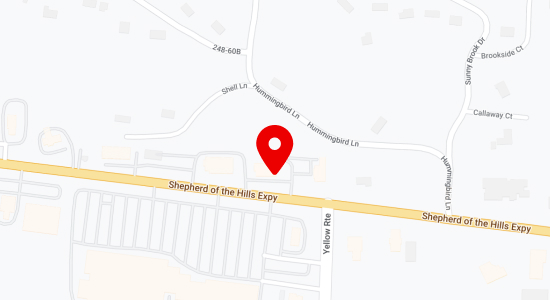
Please note that our law firm's address is for mail correspondence only. We do not accept in-office visits to this location. To schedule an appointment or consult with an attorney, please contact us via phone or email. Our contact information is readily available on our website. We look forward to hearing from you and strive to supply efficient and accessible legal services to our clients.
Ste Q, #451
Branson, MO 65616