- Contact Us Now: (417) 699-0074 Tap Here to Call Us


Can Online Posts Lead to Criminal Charges in Missouri?


An online post can result in criminal investigation in Missouri, but publishing an offensive opinion is not automatically a crime. Charges may arise when conduct meets the requirements for harassment, stalking, a true threat, or violation of a protection order. Those are distinct legal theories with different elements. The First Amendment also protects considerable speech, even when other people find it harsh, offensive, or disturbing.
A single screenshot rarely resolves the legal issues. Investigators may need the complete conversation, information about account ownership, earlier contact, the intended audience, and whether a statement conveyed a genuine threat. Repeated directed communication can present different questions from one public comment. Context, mental state, and admissible evidence are essential to determining whether any specific Missouri statute applies.
Scrivner Law Firm represents defendants in Taney, Stone and Christian counties. Attorney Dayrell Scrivner brings decades of legal experience, including approximately two decades as a prosecutor, to examining criminal allegations involving digital communications, the reliability of evidence, and the boundaries between legally protected expression and prosecutable conduct.
The First Amendment Protects Speech but Not Every Threat
Online expression is not unlawful merely because it is unpopular, insulting, or emotionally upsetting. Political criticism, personal disagreements, satire, and other expression generally have constitutional protection. True threats of violence present a different issue. Courts must distinguish communications that legitimately fall outside constitutional protection from words that are disturbing but not criminal. The nature and audience of the message can affect the analysis.
In Counterman v. Colorado, the United States Supreme Court held that a true-threat prosecution must meet a constitutional requirement concerning the speaker’s subjective awareness of a message’s threatening nature. Recklessness can satisfy that constitutional minimum, while the relevant statute may demand more. The state cannot establish a true-threat offense solely by showing that an objectively reasonable reader would feel afraid, without meeting the applicable mental-state requirements.
Meaning can depend on surrounding events. A figurative statement in a public debate might be read differently from an individualized message following a serious confrontation. Prior exchanges, requests to stop contacting someone, specific references, and the timing of an alleged threat may alter its significance. Investigators should not remove a sentence from a longer conversation and then treat that fragment as the complete communication.
A speaker’s claim that the words were a joke is evidence to consider, not an automatic defense. Similarly, an accuser’s genuine fear does not alone prove that a criminal offense occurred. Courts evaluate the elements of the charged statute and the constitutional restrictions that apply. Original messages and the circumstances surrounding them are often more helpful than generalized assertions about what social media means.
A public platform may carry posts to people the author did not specifically target. Private messages ordinarily identify a recipient more directly, but they can still be forwarded or misattributed. The defense may need to determine the intended audience, what the defendant actually wrote, and what the alleged victim saw. Those questions help distinguish evidence of a protected comment from proof of a targeted threat.
Missouri Harassment Law Turns on Purpose and Conduct
Missouri Revised Statutes sections 565.090 and 565.091 govern harassment offenses under the versions currently in force. First-degree harassment generally concerns action undertaken without good cause with the purpose to cause emotional distress and causing that distress. Second-degree harassment has a related but distinct statutory formulation. The exact language and any applicable enhancement must be checked before describing an allegation as a felony or misdemeanor.
An offensive post does not, by itself, establish the purpose required by a harassment statute. A prosecutor may point to repeated conduct, statements indicating an intention to distress, or context showing a targeted campaign. The defense may identify a legitimate purpose, misleading excerpts, or evidence inconsistent with the government’s inference. These are fact-dependent questions, not categories that can be answered solely by counting messages.
Missouri statutes sometimes appear online in multiple effective versions. Certain amendments to harassment and stalking provisions have delayed effective dates. The version governing an alleged incident must be identified rather than assuming that a future enactment already controls. This is especially important for digital-conduct provisions because wording can change while older legal summaries continue circulating.
Constitutional considerations can limit how statutes are applied to expression. Prosecutors cannot avoid those limitations merely by describing protected speech as harassment. A lawyer may examine whether the accusation concerns communication, a larger course of conduct, or independently unlawful action. The analysis should connect each alleged act to the law actually in force and the required mental state.
Repeated Online Contact May Be Evaluated as Stalking
Missouri sections 565.225 and 565.227 describe stalking offenses, including requirements concerning a course of conduct directed at a particular person under the currently operative language. First-degree stalking involves additional circumstances specified in the statute. A person repeatedly sending messages after being blocked may face investigation, but repetition alone is not a substitute for every legal element.
An allegation may involve several accounts, different devices, and messages over an extended period. The prosecution may seek to connect those communications into one course of conduct. The defense should examine whether each account is actually attributable to the defendant, whether the messages were directed at the same person, and whether the statutory intent and circumstances can be established.
An account may be shared, spoofed, or created by someone impersonating another person. A screenshot showing a familiar photograph or username does not establish authorship with certainty. Relevant evidence could include platform records, device access, login histories, witness observations, or messages found on a phone. Authentication and admissibility should be considered before assigning every online act to the person named in a police report.
Some communication has a legitimate purpose even when it is unwelcome, such as certain business questions or exchanges about shared responsibilities. Whether that purpose matters depends on the statutory language and surrounding conduct. Invoking a legitimate reason cannot excuse a true threat or a court-order violation, but a prosecutor must still prove the charged offense rather than infer criminal intent from a strained relationship alone.
Time matters. A rapid sequence of directed messages after a warning may carry different implications from a few unrelated public comments separated by substantial periods. An accurate timeline can distinguish repeated targeted contact from a collection of posts later assembled into one exhibit. The defense should review the chronology before making broad claims about a pattern.
A Protection Order Can Make Communication Independently Unlawful
Missouri section 455.085 addresses specified violations of orders of protection, including circumstances involving communication initiated by a respondent. An online message that is not itself a criminal threat could still be relevant if it violates an enforceable court restriction. The correct analysis starts with the full written order and whether the person had the required notice.
A direct message, public post tagging a person, comment through an alternate account, or request that a friend convey a message may present different legal facts. The order might restrict direct or indirect contact, or identify particular protected places. Counsel should compare the conduct with the exact terms instead of assuming that all speech about another person necessarily violates a protection order.
If a protected person initiates online contact, that does not automatically authorize the restrained person to respond in violation of an order. The court controls modifications, and a private conversation does not cancel a judicial restriction. A person facing an allegation should avoid further prohibited contact while counsel seeks the governing order and reviews the evidence.
Online statements can also become evidence in a different prosecution. A prosecutor might attempt to use an earlier message to explain motive in an assault case, or to show context in a domestic dispute. The post’s role as evidence is not identical to charging the post as a separate crime. Relevance, authenticity, admissibility, and unfair prejudice may all become contested questions.
Where one incident yields several allegations, each count must satisfy its own statutory requirements. The government may investigate harassment, stalking, and an order violation together, but the same screenshot should not be assumed to establish every offense. A defense should analyze the elements separately and identify what independent evidence supports each theory.
Authenticity and Context Can Decide a Digital-Evidence Dispute
Screenshots are convenient but incomplete. A captured image may omit earlier messages, disappear after account deletion, or lack reliable information about a sender’s identity. Cropping can distort a conversation. Counsel may seek complete threads, timestamps, attachments, platform exports, or device records. An original electronic source can sometimes resolve a disagreement that a brief printed exhibit cannot.
An image showing a person’s account name is not proof that person typed the words. Another user may have used a device or obtained access without permission. Conversely, evidence linking a device, account, and ongoing conversation may support attribution. The correct assessment considers technical records and witness testimony together, without assuming an impersonation claim must be true or false in every case.
Messages using slang, irony, emojis, or private references can be hard for outsiders to interpret. A witness may misunderstand a phrase with a meaning established through prior exchanges. An attorney can identify the context and determine whether testimony about that context is admissible. A defense should explain meaning through evidence rather than ask the court to accept a post hoc label such as ‘just a joke.’
Police may also seek data from phones or private accounts. Constitutional rules concerning searches, warrants, consent, and the scope of authorized access may apply. A device’s presence in an investigation does not automatically justify unrestricted examination of every file. Counsel can evaluate whether important material was lawfully obtained while independently analyzing whether its content meets the alleged statute.
Deleting content or pressuring others to erase it after learning of an investigation can complicate the case. A defendant should preserve relevant records lawfully and discuss the situation with counsel. This includes material that may be unfavorable as well as messages that provide context. The goal is an accurate factual record, not a selectively edited public explanation.
What Happens After a Southwest Missouri Online Accusation
Digital allegations involving Missouri residents may be investigated by local police and can lead to proceedings. Online communications may span locations, making jurisdiction and the identity of the charged offense important questions. The geographical location of an account or user does not by itself establish every issue of venue.
A defendant should obtain the charging document, preserve relevant messages, and identify any no-contact restrictions or release conditions. A public argument about the accusation can generate new material that prosecutors may examine. Private consultation with counsel provides a better setting for explaining intent and locating evidence that has not been shown to investigators.
The state bears the burden of proving a charged offense beyond a reasonable doubt. The defense may contest authorship, mental state, the existence of a statutory course of conduct, or the applicability of a particular order. A constitutional challenge may be relevant in some cases. The useful strategy depends on the precise accusation and evidence, not a categorical assumption that digital communications are harmless.
A negotiated resolution may be possible, or the matter may require contested hearings and trial. The consequences of a conviction can depend on the offense grading and record. Before deciding, a defendant should understand which factual allegations are admitted and which restrictions may continue. Avoid promising dismissal based merely on the absence of physical contact.
Speak With Scrivner Law Firm About Alleged Online Misconduct
An investigation concerning posts or messages can become complicated while police collect screenshots, seek platform records, and interview recipients about the meaning of a communication. Important context can disappear as accounts change or material is overwritten. Early defense involvement may help preserve original records and identify whether the state can satisfy the relevant statutory and constitutional requirements.
Attorney Dayrell Scrivner draws on former-prosecutor experience and criminal defense work when assessing cases involving digital statements. If an online post has prompted police questioning or a criminal charge in Taney, Stone or Christian counties, contact Scrivner Law Firm to discuss the alleged communication, the surrounding context, and possible defenses. Arrange a confidential conversation about the evidence and legal issues.
OUR ADDRESS
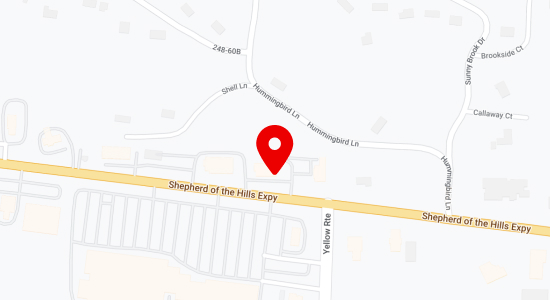
Please note that our law firm's address is for mail correspondence only. We do not accept in-office visits to this location. To schedule an appointment or consult with an attorney, please contact us via phone or email. Our contact information is readily available on our website. We look forward to hearing from you and strive to supply efficient and accessible legal services to our clients.
Ste Q, #451
Branson, MO 65616