- Contact Us Now: (417) 699-0074 Tap Here to Call Us


Can a Domestic Violence Case Continue Without the Accuser’s Cooperation in Missouri?


A Missouri domestic-violence prosecution can continue even when the person who originally reported the incident later asks to drop the case, changes an account, or declines to cooperate. A criminal prosecution is brought by the state, not privately owned by the complaining witness. The decision to file, pursue, amend, or dismiss charges generally belongs to the prosecutor, subject to the court’s authority and applicable procedural rules.
That distinction does not mean the accuser’s testimony is irrelevant or that prosecutors can prove an offense without reliable evidence. Officers may have photographs, emergency-call recordings, medical records, messages, body-camera footage, and statements from other witnesses. A recantation creates additional credibility and admissibility questions. Meanwhile, protective conditions may remain enforceable even if both people want contact restored.
Scrivner Law Firm represents defendants in Taney, Stone and Christian counties and throughout Southwest Missouri. Attorney Dayrell Scrivner’s experience includes approximately two decades as a prosecutor handling offenses involving domestic relationships. He brings that background to examining what was alleged, whether the evidence supports the charge, and how witness cooperation and constitutional protections affect a defense.
Who Controls a Criminal Charge After an Arrest?
A person who contacts police does not personally prosecute the case. Investigators gather information, and a prosecutor determines what criminal charges the state will pursue. The complaining witness may convey a preference, but that preference is not the legal equivalent of dismissing a filed charge. Similarly, an arrest does not mean a judge has already found guilt. A defendant remains entitled to applicable due-process protections and a fair opportunity to contest the evidence.
Missouri domestic assault statutes distinguish among levels of alleged conduct. Sections 565.072 through 565.076 address different degrees of domestic assault, with elements involving injury, attempted injury, and mental states that can differ substantially. The relationship between the people involved is also significant. Counsel should identify the precise charge rather than treating ‘domestic violence’ as a standalone description of one uniform offense.
For an incident reported in Branson, law enforcement may investigate locally while a state charge proceeds in Taney County, part of Missouri’s Forty-Sixth Judicial Circuit. Whether the case is charged as a misdemeanor or felony can affect procedure, potential penalties, and the evidence needed. A person’s later wish to withdraw a complaint does not alter the statutory elements the government must prove.
Missouri section 455.085 also demonstrates that the victim’s refusal to sign an official complaint does not necessarily prevent a qualifying domestic-violence arrest. An arrest standard and a conviction standard, however, are not the same. Probable cause permits certain initial actions; a criminal conviction requires proof beyond a reasonable doubt. Defense investigation should keep those legal thresholds separate rather than assuming a permitted arrest proves the prosecutor’s case.
What Can Prosecutors Use Besides the Accuser’s Testimony?
Contemporaneous evidence often receives substantial attention. Emergency calls may document how a report began, while officer video can capture the scene, injuries, property damage, and statements. Nearby residents, family members, or other witnesses may report hearing an argument or observing conduct. Photographs and medical records may document an injury, but they do not always establish who caused it or whether the charged mental state existed.
Digital communications can be important in either direction. Messages preceding a dispute may reveal context, while later texts can be interpreted as apologies, threats, attempts at reconciliation, or ambiguous expressions. Screenshots should be evaluated against full conversations and available metadata. A selected image of a conversation may omit language that changes the meaning. Preservation should be lawful and should avoid deleting or altering potential evidence.
Prosecutors sometimes attempt to use a witness’s statements made before trial. Admissibility depends on evidence rules and constitutional limitations. Missouri section 491.074 addresses prior inconsistent statements of a witness who testifies in a criminal trial; it does not transform every unsworn account from a person who never appears into automatically admissible trial evidence. The Confrontation Clause may also limit testimonial hearsay offered against the accused when its constitutional conditions are not met.
Statements given during an ongoing emergency may raise different evidentiary questions from formal police questioning after an emergency has ended. Courts consider the circumstances and the purpose of the exchange. A defense attorney may analyze whether a witness can be cross-examined, whether an exception applies, and whether particular exhibits were authenticated. The absence of a cooperative accuser makes these questions more prominent, but it does not supply one universal outcome.
What a Recantation Can and Cannot Establish
A recantation means a person changes or withdraws an earlier account. The reasons can vary. Someone may correct an honest error, dispute how an officer summarized a statement, fear consequences for a partner, feel pressure from others, or want to avoid court. None of those explanations should be assumed without evidence. Prosecutors and defense counsel may evaluate changes against objective records and the consistency of the person’s statements.
If the accuser testifies to facts different from an initial report, questioning can explore the reasons and timing of that change. Missouri section 491.074 may permit qualifying prior inconsistent statements to be considered as substantive evidence when the witness testifies. The specific procedural foundation and constitutional requirements still matter. It would be misleading to say either that the first account always controls or that a later recantation necessarily defeats the prosecution.
Where a witness does not appear, a subpoena may become relevant. Courts have legal tools to compel attendance in appropriate circumstances, although what testimony may be compelled and how constitutional privileges apply are separate questions. A witness may invoke a recognized privilege when the law permits it. Neither the prosecution nor defense should presume that a reluctant person can be forced to adopt a particular version of events.
The accused should not personally pressure the complaining witness to sign a new statement, avoid a subpoena, or tell a preferred story. Contact may violate a protective condition, and efforts to influence testimony can create separate legal problems. If information about a recantation is material, counsel can handle it through proper investigation and court procedures. A truthful change in an account deserves examination without coercion or assumptions about motive.
No-Contact Conditions Continue Until Properly Changed
Criminal cases may involve release conditions restricting direct or indirect contact with a complainant. A civil order of protection may exist as well, and its restrictions can operate independently of the criminal prosecution. The exact source and language of each order matter. A request by the protected person to resume communication does not necessarily give the defendant legal permission to do so.
Missouri section 455.085 provides penalties for specified violations of orders of protection and addresses notice. Other legal authority may govern violation of a criminal court’s release conditions. A person could therefore face complications even if no new assault is alleged. The safest course is to obtain the current written orders, understand who they bind, and seek modification through counsel and the appropriate court if a change is warranted.
Indirect contact can be as consequential as an in-person encounter when an order prohibits it. Messages sent through friends, social media, family members, or shared accounts may become part of an investigation. The fact that the complainant initiated a conversation does not automatically negate a restriction imposed on the respondent. Anyone facing charges should distinguish a voluntary personal reconciliation from the court’s legal authority over the conditions.
Accidental meetings present different facts from deliberate communication. For example, two people might unexpectedly arrive at the same public business in Branson. A defendant should avoid assuming that an unintended encounter authorizes an extended conversation. The governing order and the person’s actions after realizing the other party was present can matter. Documenting the circumstances and following counsel’s guidance can reduce misunderstandings.
Credibility, Burden of Proof, and Defense Strategy
The prosecutor must prove the charged elements beyond a reasonable doubt, whether or not a complaining witness cooperates. A charge involving physical injury may require proof of that injury and the relevant mental state; another degree of domestic assault may involve a different form of prohibited conduct. The relationship between the individuals may also be disputed. Counsel should match evidence to the exact statute rather than argue only about a general description of the incident.
Officer observations deserve careful examination. An officer arriving after a disturbance may see injuries, broken objects, or emotional reactions but may not have witnessed the events that caused them. Multiple people can report different sequences, and witnesses may lack a clear view. Video timestamps, photographs, medical descriptions, and available third-party testimony can reveal discrepancies or support specific parts of an account.
Defensive force can be another issue when evidence supports it. Missouri section 563.031 addresses justified force in defense of oneself or another, with limits concerning reasonable belief, deadly force, and the initial aggressor. Counsel should not assume that every mutual argument constitutes legal self-defense. The nature of the threat, relative conduct, and timing must be examined carefully, including whether any claimed protective action was proportionate.
Some cases may also raise procedural questions about unlawful searches, custodial statements, discovery, or the reliability of electronic evidence. These issues have separate legal standards and should not be buried under the single question of whether an accuser wants to cooperate. Early access to the complete file may reveal that a charge is strongly corroborated, materially disputed, or based on facts different from the initial public account.
Preparing for a Taney County Court Date
A defendant should identify the criminal court, case number, exact charge, and all scheduled appearances. Taney County state proceedings fall within the Forty-Sixth Judicial Circuit. Failure to appear or violation of release conditions can create consequences unrelated to the merits of the original allegation. The defendant should preserve notices and court orders and ensure that counsel receives them promptly.
Discovery may include the original complaint, officer reports, available recordings, medical or photographic evidence, and identified witness materials. Defense preparation may require prompt requests to preserve material not routinely included in a prosecutor’s first production. A timeline showing when messages were exchanged or when officers arrived can be particularly useful where initial and later accounts differ.
Plea negotiations, dismissal requests, hearings, and trial are different possible paths. The prosecution may reconsider a weak case, but the lack of accuser participation does not guarantee dismissal. A negotiated disposition also deserves scrutiny for effects on future contact, firearm possession, employment, and other collateral matters. The defendant needs individualized advice based on actual evidence rather than promises about what an unwilling witness will accomplish.
The strongest defense approach does not ask the accused to choose between vilifying and relying on the complaining witness. It asks what can be proved, which statements are admissible, what objective evidence exists, and whether the court’s orders have been respected. The answer may change as discovery develops, so continued attention to both procedure and the record remains important.
Speak With Scrivner Law Firm About a Domestic Assault Accusation
A domestic-violence case can become complicated while officers gather records, prosecutors review earlier statements, and courts enforce release or protection orders. A witness’s changed account may require additional investigation rather than immediately ending a prosecution. Early representation may help protect constitutional rights, preserve independent evidence, and clarify contact restrictions before new problems arise.
Attorney Dayrell Scrivner brings extensive experience as a former prosecutor and criminal defense attorney to these matters. If you are under investigation or facing domestic assault charges in Taney, Stone or Christian counties, contact Scrivner Law Firm to discuss the evidence, the applicable law, and the procedural issues affecting your case. Schedule a confidential discussion with the firm to examine your defense options.
OUR ADDRESS
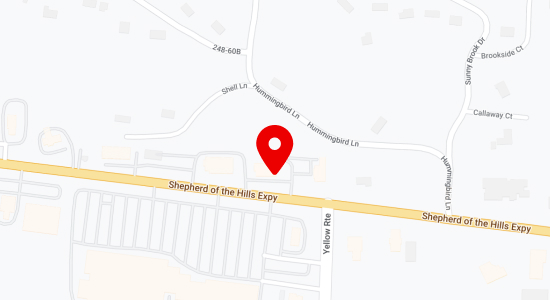
Please note that our law firm's address is for mail correspondence only. We do not accept in-office visits to this location. To schedule an appointment or consult with an attorney, please contact us via phone or email. Our contact information is readily available on our website. We look forward to hearing from you and strive to supply efficient and accessible legal services to our clients.
Ste Q, #451
Branson, MO 65616