
Former Prosecutor
of 20 Years on
Your Side
of 20 Years on
Your Side






If you are pulled over for suspected DWI in Missouri, the moment an officer asks you to take a breath test can feel like a trap. Many people think refusal is the “safe” choice because it prevents a number from being used against them. In reality, refusing a breath test can trigger fast, serious consequences that are separate from the criminal charge and can follow you even if the DWI case is later reduced or dismissed.
Missouri’s refusal rules are built around the state’s implied consent laws. By driving on Missouri roads, you are treated as having agreed to chemical testing in certain situations. Refusing does not necessarily stop the investigation, and it can create two parallel battles: a driving-privilege revocation case and a criminal DWI case.
At Scrivner Law Firm, Dayrell Scrivner brings decades of courtroom experience to these situations, including more than 20 years as a prosecutor and years as a chief assistant prosecutor. He now focuses on criminal defense and DUI/DWI matters across Southwest Missouri, using practical strategy, careful evidence review, and motion practice when your rights were violated. If you are facing a refusal allegation, the earlier you get counsel involved, the more options you may have.
Missouri treats chemical testing as part of the driving privilege. Under Missouri law, when an officer has the legal basis to request a chemical test, the officer must advise you that a refusal can be used against you and that your license will be revoked if you refuse. The advisement matters because it becomes a key issue in many refusal challenges.
Refusal is not just about the breath machine at the station. Missouri law allows chemical tests of breath, blood, saliva, or urine in appropriate circumstances. Most DWI arrests involve a request for an evidentiary breath test after arrest, usually at a jail or police department.
A common misconception is that refusal is only a criminal issue. In Missouri, refusal most often creates an administrative driver’s license revocation, along with consequences in your criminal case. Those two tracks move on different timelines and require different defense approaches.
A refusal is not always as simple as saying “no.” Missouri refusal litigation often turns on whether the refusal was clear, voluntary, and unequivocal.
If you clearly decline the test after the officer reads the implied consent warning, that is typically treated as a refusal. The officer will document it and start the revocation paperwork.
Some people try to stall by asking repeated questions, arguing, or refusing to cooperate with the testing process. In many situations, delaying can be treated as refusal, especially if the officer gives clear instructions and you do not comply.
Missouri provides a limited right to attempt to contact an attorney before deciding, but it is not unlimited. If you request to speak with an attorney, you must be given 20 minutes to try to contact one. After that period, if you still refuse, it is deemed a refusal.
This is an area where procedure matters. Courts have addressed when the 20-minute period starts and what officers must do during that window. In Norris v. Director of Revenue, the Missouri Supreme Court addressed how the 20-minute waiting period is measured. The details of timing and officer conduct can make or break a refusal challenge.
People with asthma, COPD, recent surgery, panic symptoms, or other medical issues sometimes cannot provide an adequate sample. Officers may still record that as a refusal, but it can be contested if you were genuinely unable to comply and you tried in good faith. These cases often require careful review of reports, body camera footage, machine logs, and medical documentation.
Missouri case law recognizes that if you invoke the right to attempt to contact an attorney, law enforcement cannot sabotage that limited right. In Roesing v. Director of Revenue, the Missouri Supreme Court addressed a situation involving interference with the ability to confer privately with counsel, and the Court analyzed whether the alleged refusal was voluntary and unequivocal. That type of issue can be central when a refusal is based on what happened during the attorney-contact window.
Refusal cases move fast. Even if you have not been formally charged in court yet, your driving privilege can be in jeopardy almost immediately.
After a refusal, the officer typically serves a notice of revocation, takes your Missouri driver’s license, and issues a temporary driving permit that is valid for a short period, commonly 15 days. That temporary permit is not the end of the story. It is the warning sign that the clock is already running.
Once the paperwork is processed, the Missouri Department of Revenue revokes driving privileges for a refusal. For many drivers, the base refusal revocation period is one year.
This revocation is separate from the criminal DWI case. You can beat the DWI charge and still lose your license on the refusal unless you successfully challenge the revocation.
Missouri allows you to challenge a refusal revocation by filing a petition for review in the circuit court (or associate circuit court) in the county where the arrest or stop occurred. There are strict deadlines. If you miss them, the revocation can go into effect and you may lose leverage that could have existed early.
In many cases, a lawyer will also pursue a stay order. A stay is a court order that can pause the revocation while the case is being litigated, which may allow you to continue driving lawfully during the challenge. A stay is not automatic. It depends on timing, the court, your driving history, and the facts of the stop and refusal.
The refusal case is not a full “DWI trial” about everything that happened. The judge typically decides only a limited set of issues, such as whether the stop/arrest occurred, whether the officer had reasonable grounds, and whether you refused.
That narrow scope is why early investigation matters. Many refusal wins come from precise, document-based issues: what the officer actually said, whether the warning was delivered properly, whether the officer had lawful grounds, and whether the refusal was truly voluntary and unequivocal.
Even after the revocation period ends, reinstatement is not always automatic.
Missouri commonly requires completion of a Substance Abuse Traffic Offender Program (SATOP) or a comparable program as part of reinstatement after alcohol-related enforcement actions. In addition to the program itself, there may be assessments and recommended education or treatment components.
Missouri reinstatement after refusal can involve proof of financial responsibility. If you do not file the required proof, the revocation can last longer than the “headline” one-year period in some circumstances.
Depending on your history, you may be required to install and maintain an ignition interlock device (IID) for reinstatement or for any limited driving privilege. The rules can be especially strict if there is a prior alcohol-related enforcement contact. IID compliance can involve ongoing monitoring reports, and violations can extend the IID period.
Refusing a breath test does not prevent arrest, and it does not prevent prosecution. It changes what evidence the state uses and how the case is argued.
Missouri law allows evidence of refusal to be admitted in proceedings related to the stop or arrest. In practice, prosecutors often frame refusal as “consciousness of guilt,” arguing that a driver refused because they believed the test would confirm intoxication.
A strong defense may respond by showing alternative explanations: fear, confusion, misunderstanding, bad advice from a friend, language barriers, medical limitations, or improper police procedure.
Many DWI cases are prosecuted without a breath number. Officers rely on driving behavior, field sobriety tests, odor of alcohol, admissions, balance issues, speech patterns, and video. If the stop and the arrest were legal and the officer’s observations are persuasive, refusal alone will not prevent charges.
Another misconception is that refusing breath means “no chemical evidence.” Depending on the situation, law enforcement may seek a warrant for a blood draw. Missouri appellate decisions have addressed that the refusal statute does not eliminate a court’s ability to issue a search warrant for a blood sample in appropriate circumstances. Federal constitutional law also shapes when warrants are required and when exceptions may apply.
In practical terms, refusing breath can sometimes lead to a blood test anyway, especially when there is an accident, injury, or other aggravating factor. That is one reason refusal decisions should be made carefully and with real legal advice, not assumptions.
In many states, refusal can create separate criminal penalties, and the law has evolved over time in light of Fourth Amendment decisions. Missouri’s primary refusal consequence is the administrative license revocation and the use of refusal evidence in the criminal case, rather than a standalone criminal “refusal” charge in a typical passenger-vehicle stop.
That said, refusal can still carry heavy practical consequences. It can affect charging decisions, plea negotiations, bond conditions, and how a case is presented to a judge or jury.
Many drivers immediately ask one question: “Can I still drive to work?”
Missouri does allow limited driving privileges in certain situations, but refusal cases can be more complicated than standard suspensions, and restrictions may include ignition interlock requirements. Eligibility depends on your record, the nature of the enforcement contact, whether you have prior alcohol-related contacts, and whether you meet proof and compliance requirements.
A well-handled strategy often coordinates three moving parts: the refusal challenge (petition for review), a possible stay order, and a parallel plan for limited driving privileges if needed. Done right, this can reduce the risk of being unable to legally drive for months while the criminal case is pending.
People often make a bad situation worse in the days after the arrest. A few patterns show up again and again.
First, they assume the criminal court date is the only deadline that matters. In reality, refusal and license consequences start immediately, and waiting can cost you the ability to challenge the revocation effectively.
Second, they talk about the incident on the phone, by text, or on social media. Prosecutors can sometimes obtain those communications, and they rarely help.
Third, they drive on a revoked license or violate permit restrictions. That can add new charges and make a resolution harder.
Fourth, they rely on “rule of thumb” advice about whether to refuse. The best choice depends on the facts, your history, what the officer has already observed, and whether a warrant is likely.
A refusal defense is not a one-size-fits-all script. It is often a tight, evidence-driven argument built from records and procedure.
If the officer lacked a lawful basis to stop you, or if the arrest was not supported by proper grounds, that can affect both the criminal case and the refusal revocation. Video, dispatch logs, and report inconsistencies can be critical here.
Officers must provide the implied consent information in the manner required by Missouri law. When the warning is incomplete, misleading, or improperly delivered, it can become a major issue in the refusal litigation.
A refusal must be a real refusal. If the officer prevented a private attorney call, cut off the 20-minute window, misled you about your options, or treated inability as refusal, the defense may be able to argue that the statutory requirements were not met and the revocation should not stand.
Cases involving partial blows, machine errors, confusion, language barriers, or medical conditions can be defensible, especially when the documentation does not match the video or when the officer’s explanation changes over time.
Breath test refusal cases are won in the details. Scrivner Law Firm approaches these cases with the perspective of a former prosecutor who knows how DWI files are built, how officers are trained, and where the pressure points are in both the administrative case and the criminal case.
Dayrell Scrivner has over 30 years of legal experience, including roughly two decades as a prosecutor and years in leadership roles within the prosecutor’s office. He uses that background to evaluate what the state will emphasize, identify what can be challenged, and push for outcomes that protect your license, your record, and your future.
The firm also understands that many clients need flexibility. Scrivner Law Firm’s Branson office address is primarily for mail correspondence, and appointments are typically scheduled by phone or email. That structure can help clients across Taney County, Stone County, Christian County, and surrounding areas get representation without unnecessary delay.
If you refused a breath test in Missouri, do not assume the damage is done. There may be defenses, deadlines to meet, and strategies to keep you legally driving while your case is pending. To speak with Scrivner Law Firm about your refusal and your options, call us or reach out through the firm’s contact channels to schedule a confidential consultation. The sooner you act, the more control you may be able to keep over what happens next.
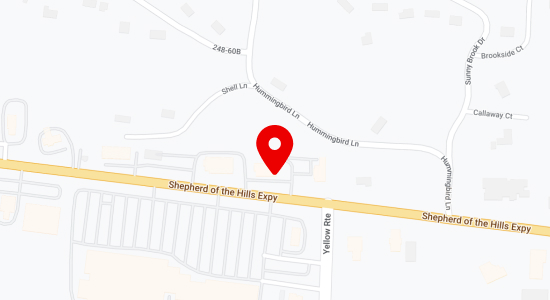
Please note that our law firm's address is for mail correspondence only. We do not accept in-office visits to this location. To schedule an appointment or consult with an attorney, please contact us via phone or email. Our contact information is readily available on our website. We look forward to hearing from you and strive to supply efficient and accessible legal services to our clients.
Branson, MO 65616