
Former Prosecutor
of 20 Years on
Your Side
of 20 Years on
Your Side









Being released on bond in a Missouri criminal case does not mean the case is over. It means the court has allowed you to remain out of custody while the case is pending, usually with conditions attached. Those conditions may require you to appear in court, avoid new criminal conduct, obey no-contact orders, stay away from certain places, submit to monitoring, report to pretrial services, or follow other restrictions imposed by the judge.
If you are arrested again while out on bond, the situation can become far more serious. The new arrest may affect the new case, but it can also put your original bond at risk. A judge may decide that the new arrest shows you are a danger to another person, a danger to the community, or a flight risk. The prosecutor may ask the court to revoke your bond, increase your bond, add stricter conditions, or hold you in jail while the original case continues.
That does not mean every new arrest automatically proves guilt. An arrest is not a conviction. Police can be wrong. Witnesses can be mistaken. The new charge may be weak, exaggerated, or unsupported by admissible evidence. Still, from the court’s point of view, a new arrest while on bond raises immediate concerns about compliance, risk, and whether the existing release conditions are enough.
Scrivner Law Firm represents people facing criminal charges in Taney, Stone, Christian, and surrounding Missouri counties. Attorney Dayrell Scrivner is a former prosecutor with more than 30 years of legal experience. He spent nearly two decades in the Stone County Prosecutor’s Office, including 16 years as Chief Assistant Prosecuting Attorney, before entering private practice. That background gives him insight into how prosecutors view bond violations, new arrests, and requests to detain defendants before trial.
Many people think of bond as money paid to get out of jail. That is part of it, but it is not the whole picture. In Missouri, bond is tied to a court order. When a judge releases someone before trial, the judge may impose conditions designed to make sure the person appears in court and does not create a safety risk while the case is pending.
Missouri law recognizes that a person charged with a bailable offense may be released pending trial, appeal, or another stage of the case. Under Section 544.455, RSMo, a judge may release a defendant on personal recognizance unless the judge determines that personal recognizance will not reasonably assure the person’s appearance. If more is needed, the court may impose conditions of release.
Section 544.453, RSMo, also requires Missouri judges to consider whether the defendant poses a danger to a victim, the community, a witness, or another person, and whether the defendant is a flight risk. Those same concerns often become central when someone is arrested again while already out on bond.
A new arrest can make the court question whether the original bond conditions were sufficient. The court may ask whether the defendant was ordered not to commit new offenses, whether there was a no-contact order, whether drugs or alcohol were involved, whether the new arrest involved violence, and whether the defendant followed every part of the original release order.
When you are arrested on a new charge while out on bond, there are usually two separate tracks to think about. The first is the new criminal case. The second is the pending case in which you were already released.
The new case may have its own arrest, booking process, bond setting, arraignment, discovery, and defense strategy. At the same time, the prosecutor in the original case may file a motion asking the court to revoke or modify your bond. The judge may also act after receiving notice of the new arrest, especially if the new allegations suggest a violation of existing release conditions.
For example, if the original case involved domestic assault and the bond conditions included no contact with the alleged victim, a new arrest involving the same person may be treated very seriously. If the original case was a DWI and the new arrest is another alcohol-related driving offense, the court may view the new arrest as evidence that existing conditions did not protect the public. If the new arrest involves drugs, weapons, threats, witness contact, or failing to appear, the court may consider stricter supervision or detention.
Even when the new arrest is unrelated to the original charge, it can still matter. Most bond orders require the defendant to obey all laws and avoid new criminal conduct. A new arrest may be treated as an alleged violation of that condition.
Bond revocation means the court takes away the release that allowed you to remain out of jail while the case was pending. If bond is revoked, you may be held in custody unless the court later sets a new bond or grants release under different conditions.
A prosecutor may argue that the new arrest shows the defendant cannot be trusted to follow court orders. The defense may respond that the new allegation is unproven, that the facts are disputed, that the arrest resulted from a misunderstanding, or that less restrictive conditions can address the court’s concerns.
The judge does not have to treat every new arrest the same way. The facts matter. A new arrest for a minor ordinance violation is different from a new arrest for felony assault. A technical violation is different from an allegation involving a weapon or alleged victim intimidation. A weak probable cause statement may be challenged differently than a case with video, admissions, or multiple witnesses.
Still, the risk is real. If the court believes no combination of conditions will reasonably assure appearance in court or protect others, the defendant may be detained.
In some cases, the judge may not revoke bond completely. Instead, the court may increase the bond amount or require a different type of bond.
For example, someone who was previously released on personal recognizance may be required to post a cash or surety bond after a new arrest. Someone who posted a lower bond may face a higher bond. The court may also decide that the defendant must satisfy conditions in both cases before being released.
This can become confusing because the person may now have more than one case, more than one bond, and more than one set of conditions. Posting bond in the new case may not be enough if the original court has issued a warrant, placed a hold, or revoked the earlier bond. A defendant may believe they are about to be released, only to learn that another court order keeps them in custody.
That is one reason fast legal action matters. An attorney can review both cases, determine whether there is a hold or revocation motion, and seek a hearing when appropriate.
A judge may also decide to allow continued release, but only with stricter conditions. Missouri courts have broad authority to impose conditions designed to address appearance and safety concerns. Depending on the case, additional conditions may include no contact with certain people, travel restrictions, curfews, GPS monitoring, drug testing, alcohol monitoring, ignition interlock requirements, firearm restrictions, or reporting requirements.
These conditions are not just suggestions. Violating them can create more problems, even if the violation does not result in a new conviction. A missed drug test, unauthorized travel, contact with a protected person, or failure to report can lead to another hearing and another request to revoke bond.
When a person is already facing a new arrest while out on bond, the court may be less forgiving about later mistakes. The judge may view repeated violations as a pattern. Prosecutors may argue that the defendant has been given multiple chances and still has not complied.
If a defendant violates the bond agreement, financial consequences may follow. Section 374.770, RSMo, addresses breach of a bond contract and provides that the court shall declare a bond forfeiture unless the surety informs the court that the defendant is incarcerated somewhere within the United States. If forfeiture is avoided or later set aside because the defendant is incarcerated, the surety may still be responsible for returning the defendant.
This matters most when a commercial bond company or surety is involved. If the defendant is arrested on a new case and does not appear in the original case, the bond company may be at risk financially. The surety may take steps to locate the defendant, surrender the defendant, or ask the court for relief.
For the defendant, the practical consequence is that a new arrest can damage the relationship with the bond company. The company may be unwilling to remain on the bond, may surrender the defendant, or may require additional money or collateral before helping with another release.
A new arrest while out on bond is serious. Missing court afterward can make it much worse.
Under Section 544.665, RSMo, failure to appear can be charged as a separate offense. If the criminal matter for which the person was released included a felony, failure to appear is a class E felony. If the underlying matter included a misdemeanor or misdemeanors but no felony, failure to appear is a class A misdemeanor. If the matter included only infractions, failure to appear is an infraction.
This is important because a person arrested on a new case may miss a court date in the original case because they are in custody elsewhere, confused about transportation, or unsure which court date controls. That does not mean the issue can be ignored. The court in the original case needs to know where the defendant is. A lawyer may need to address the missed appearance, request a recall of a warrant, or ask the court to avoid treating the absence as willful.
When multiple counties are involved, the problem can become even more complicated. Someone may have a pending case in Taney County, a new arrest in Stone County, and a court date in Christian County. Each court may have its own schedule and orders. One missed appearance can create a warrant, a bond forfeiture, or another charge.
A new arrest can also affect the way prosecutors evaluate the original case. Before the new arrest, the prosecutor may have been willing to consider a reduced charge, suspended imposition of sentence, probation, diversion, or another negotiated outcome. After the new arrest, the prosecutor may become less flexible.
From the State’s perspective, a new arrest can be used to argue that the defendant is not a good candidate for leniency. The prosecutor may claim that the defendant had a chance to remain law-abiding and failed. In some cases, the State may withdraw an offer, demand stricter probation terms, oppose bond reduction, or seek jail time.
The defense should not simply accept that narrative. A new arrest is still only an accusation. The defense may need to show that the new case is weak, unrelated, overcharged, or unsupported. The defense may also need to separate the cases strategically so that allegations in one case do not unfairly influence the other.
Judges and prosecutors pay close attention to the nature of the new arrest. Some allegations create more immediate bond concerns than others.
A new violent offense may lead the court to focus on danger to the community or a specific person. A domestic violence allegation may raise concerns about victim safety, no-contact orders, and escalating conduct. A DWI or drug arrest may lead to alcohol testing, drug testing, treatment conditions, or driving restrictions. A weapons offense may cause the court to consider firearm restrictions or detention. A theft or property offense may be viewed differently, but it can still be used to argue that the defendant is not following the law while on release.
The relationship between the original case and the new arrest also matters. Two similar arrests close together may create a stronger argument for stricter bond. For example, a person out on bond for drug possession who is arrested again for drug distribution may face a harder bond hearing than someone arrested on an unrelated municipal matter.
Because the new arrest can affect bond, it is important to examine the facts quickly. Police reports, probable cause statements, body camera footage, witness statements, dispatch records, search issues, and field procedures may all matter.
If the new arrest involved a traffic stop, the defense may review whether the officer had lawful grounds for the stop and whether any search was lawful. If the new arrest involved an alleged assault, the defense may look for self-defense evidence, inconsistent statements, injuries to both parties, missing witnesses, or unreliable reporting. If drugs or weapons were found, the defense may examine possession, ownership, search and seizure issues, and whether the State can connect the item to the defendant.
At a bond hearing, the defense may not be trying the entire new case, but the strength of the new allegation can matter. A judge may be more willing to continue release if the defense can show the new arrest is disputed, unsupported, or less serious than it first appeared.
The first priority is to avoid making the situation worse. Do not discuss the facts of either case with police without legal advice. Do not contact alleged victims or witnesses if there is any no-contact order or if contact could be viewed as intimidation. Do not assume that posting bond in the new case resolves the original case. Do not miss any scheduled court dates unless your attorney has addressed the issue with the court.
The next priority is to identify every pending case, every bond condition, and every upcoming hearing. This includes municipal cases, associate circuit cases, circuit court felony matters, probation matters, and cases in other counties. A person may not realize how many separate orders are active until a new arrest brings everything to the surface.
A defense lawyer can determine whether a motion to revoke bond has been filed, whether a warrant exists, whether a bond forfeiture has been entered, whether a surety has surrendered the defendant, and whether a bond review hearing should be requested.
An arrest while out on bond requires a defense strategy that looks at the full picture. It is not enough to focus only on the new charge. The defense must also protect the client’s release status, address the original case, manage court dates, respond to any bond revocation request, and prevent avoidable mistakes from creating additional consequences.
Attorney Dayrell Scrivner’s experience as a former prosecutor is especially valuable in this situation. He understands how prosecutors evaluate risk, how they argue bond violations, and how judges may view a new arrest while a case is pending. His background in Missouri criminal courts helps him identify the issues that need immediate attention and the arguments that may matter most at a bond hearing.
In some cases, the best strategy may be to seek continued release with tighter conditions. In others, the focus may be challenging the new arrest, correcting inaccurate allegations, negotiating with the prosecutor, or asking the court to set a reasonable bond. Every case depends on the facts, the charges, the defendant’s history, the county, the judge, and the specific bond conditions already in place.
If you or someone you love has been arrested while out on bond in Missouri, the situation should be handled quickly and carefully. A new arrest can lead to bond revocation, higher bond, stricter release conditions, bond forfeiture, new charges, and a harder path in the original case. It can also create confusion if multiple courts, counties, bonds, or court dates are involved.
Scrivner Law Firm helps clients facing criminal charges in Taney, Stone, Christian, and surrounding Missouri counties. Led by former prosecutor Dayrell Scrivner, the firm provides experienced criminal defense for people dealing with bond problems, new arrests, warrants, and pending charges. Contact Scrivner Law Firm today to discuss your case, protect your rights, and begin building a strategy for both the new arrest and the original case.
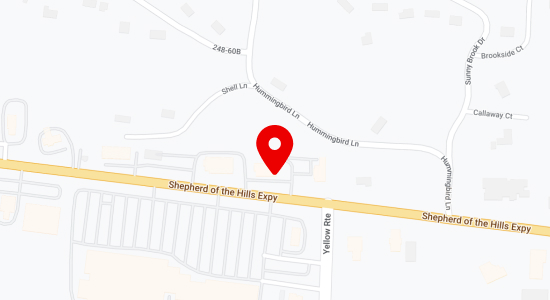
Please note that our law firm's address is for mail correspondence only. We do not accept in-office visits to this location. To schedule an appointment or consult with an attorney, please contact us via phone or email. Our contact information is readily available on our website. We look forward to hearing from you and strive to supply efficient and accessible legal services to our clients.
Branson, MO 65616