
Former Prosecutor
of 20 Years on
Your Side
of 20 Years on
Your Side







If you are arrested or investigated in Taney County, the court system can feel like a maze, especially when you are trying to figure out which court handles what, who the key players are, and what happens next. The good news is that Missouri criminal cases generally follow a predictable path once you know the structure. The better news is that a defense strategy is often strongest when it starts early, before a case “hardens” through statements, bond conditions, and charging decisions that become difficult to unwind.
Scrivner Law Firm represents people across Taney County, including Branson, Forsyth, Hollister, Merriam Woods, and Rockaway Beach. The firm is led by Dayrell Scrivner, a criminal defense attorney and former prosecutor with decades of experience in the legal system, including many years handling serious cases and supervising prosecutors as Chief Assistant Prosecutor.
This page explains how Taney County’s criminal courts are organized, what typically happens at each stage of a criminal case, and how constitutional case law shapes what the courts can and cannot do.
Taney County is the 46th Judicial Circuit in Missouri. That matters because the “circuit court” is the main trial court for felonies and many misdemeanors, and it also houses divisions that handle certain case types and proceedings.
Taney County became its own single-county circuit beginning January 1, 2017, after legislation divided the former 38th Judicial Circuit. In practical terms, that split reinforced Taney County’s local administration of its dockets, court rules, and scheduling.
In Missouri, the circuit court is the court of general jurisdiction. Felony prosecutions, jury trials, and many higher-stakes hearings happen here. The circuit court also oversees associate circuit divisions, which are often where a criminal case begins.
Local court rules for Taney County identify Associate Division I and Associate Division II, and they spell out the general assignment of case types between those divisions. While assignments can shift by administrative order, the local rules provide a useful baseline for understanding where your case may first land.
In Taney County’s local rules, Associate Division I is assigned misdemeanor and infraction cases, as well as felony matters before the filing of an information, along with several categories tied closely to criminal practice such as municipal ordinance cases when a municipality has not provided a municipal judge, and trial de novo proceedings from municipal divisions.
That single sentence about felonies before the filing of an information is a big deal. It typically covers early felony proceedings like initial appearances, bond settings, and preliminary hearing stages, where the judge decides whether probable cause supports holding the case for further prosecution.
Associate Division II is assigned a range of civil and family matters in the local rules, but the broader takeaway is this: the associate divisions are where the court system begins interacting with a case at the earliest and most critical moments, when conditions of release, no-contact orders, and early evidentiary issues can reshape someone’s life immediately.
Not every criminal-style case starts as a state misdemeanor or felony. Many people in Taney County first encounter court through a municipal citation.
The City of Branson’s Municipal Division explains that it is a division of the Circuit Court of Taney County, 46th Judicial Circuit, and it handles alleged traffic, ordinance, and parking violations, along with appearances, fines, and community service. Branson’s municipal courtroom is located at Branson City Hall on West Maddux Street.
Even though a municipal matter can feel “minor,” it can still carry real consequences. Some municipal cases involve allegations that mirror state-law offenses, and certain outcomes can create collateral damage with driving privileges, employment checks, professional licensing, or future charging decisions. Municipal cases can also become state cases, especially if new facts emerge or if a person is accused of violating conditions tied to a municipal disposition.
Criminal cases are not handled by judges alone. The clerk’s office, prosecutors, law enforcement agencies, and court services all influence the pace and practical realities of a case.
Taney County’s Circuit Clerk’s Office information identifies the judicial facility location at 266 Main Street in Forsyth, Missouri, and provides office contact details. The Circuit Clerk’s Office is a central hub for filings, records, and administrative processing in Taney County cases.
If you are charged, the clerk’s file becomes the official record of what has happened and what deadlines apply. Bond conditions, court dates, motions, continuances, and disposition paperwork all live there. A defense lawyer who takes your case seriously treats the clerk’s file as an active map, not a passive archive.
The Taney County local court rules cover practical courtroom expectations and procedures that affect criminal cases, such as how cases are assigned, how certain filings are handled, and even rules on courtroom decorum and electronics.
Local rules do not override constitutional law or statewide criminal procedure, but they often determine how quickly you get a hearing, how a docket is called, and what a judge expects when you file a motion. Those details can influence outcomes, especially in fast-moving cases where a bond hearing or suppression issue needs immediate attention.
Every case has its own facts, but most cases follow a familiar progression. Understanding the stages helps you avoid common traps, including the trap of waiting too long to get counsel involved.
A case may start with an arrest, a warrant, a summons, or a citation. The procedural start matters because it affects timing for initial appearance, bond, and conditions of release.
From a defense perspective, the start date also matters because evidence preservation begins immediately. Surveillance video is overwritten. Phone data gets lost. Witness memories shift. In a county with heavy tourism seasons, witnesses may leave town quickly, which can make early investigation even more important.
At or soon after the initial court appearance, the court may address bond or other conditions of release. Conditions can include travel restrictions, firearm restrictions, reporting requirements, and no-contact orders.
Bond is not only about money. It is about leverage and freedom. A person who is out and stable is better positioned to work, maintain family relationships, gather records, and help counsel prepare a defense.
Constitutional law frames parts of this stage, too. Excessive bail principles are rooted in the Eighth Amendment, and due process concerns arise when conditions function as punishment before conviction. A practical defense strategy often focuses on presenting a judge with lawful, concrete reasons why restrictive conditions are unnecessary for safety or court appearance.
For misdemeanors and infractions, Taney County’s local rules assign those cases to Associate Division I absent a different order. Many misdemeanor cases resolve through negotiated dispositions, diversion options when available, or trials.
A key legal reality is that misdemeanor charges can still trigger serious consequences, including jail exposure, probation terms, driver’s license effects, and, in some contexts, firearm disabilities or immigration complications. A “quick plea” can be the most expensive decision a person makes.
Felony cases often begin in the associate division stage, particularly before an information is filed. Early felony litigation can involve bond hearings, probable cause disputes, and preliminary hearing strategy.
A preliminary hearing is not a mini-trial, but it is a meaningful checkpoint. It can lock in testimony, expose weaknesses, and sometimes reveal legal issues that support motions later. It can also be mishandled if the defense is unprepared or if the accused has made damaging statements.
Once an information is filed, the case is generally positioned for higher-level felony proceedings, including formal arraignment on the information, motion practice, and trial settings.
At arraignment, a defendant typically enters a plea, and the court sets the case posture for the next steps. Discovery, including police reports, body-worn camera footage, lab results, and witness statements, becomes central.
This is where constitutional case law often becomes more than theory.
If law enforcement questioned someone in custody without proper Miranda warnings, the defense may challenge the admissibility of statements under Miranda v. Arizona.
If the prosecution withholds material exculpatory evidence, Brady v. Maryland is a cornerstone for relief, and it also informs how defense counsel presses discovery disputes.
If a case involves testimonial hearsay, Crawford v. Washington shapes confrontation rights and admissibility.
If a search or seizure was unlawful, Fourth Amendment doctrines and Missouri-specific interpretations can support a motion to suppress, which can change the entire negotiation posture.
If the defense attorney’s performance is later challenged as ineffective, Strickland v. Washington supplies the framework, which is one reason competent defense counsel focuses on investigation, motion practice, and strategic decision-making from the beginning.
These cases are not just citations. They are tools that define what evidence the jury is allowed to hear and what the state must prove with admissible evidence.
Most cases resolve without trial, but trial readiness drives better outcomes even when a case ultimately resolves by negotiation. Missouri criminal cases often turn on credibility, legal admissibility, and whether the state can carry its burden beyond a reasonable doubt.
Sentencing, if it occurs, can involve incarceration, probation, fines, treatment requirements, restitution, and long-term collateral consequences. A defense approach at sentencing should be fact-driven and forward-looking, focusing on mitigation, support systems, treatment where appropriate, and realistic compliance plans that help avoid probation violations.
Some people only learn after conviction that they had appellate issues or post-conviction options. Others want to challenge a probation revocation or seek relief from an older case that keeps resurfacing in background checks.
Missouri has structured paths for direct appeal and post-conviction motions. These are deadline-driven and highly procedural. Even if you feel certain something was unfair, the courts require the claim to be raised the right way and on time.
A lawyer who understands criminal litigation from both sides, including prosecution experience, is often better equipped to identify which issues are truly appealable, which are better framed as post-conviction claims, and which are practical problems that may be addressed through other lawful remedies.
The most common misconception in criminal cases is that you should “wait and see” what the prosecutor offers. In reality, many of the most important decisions happen early, sometimes before the prosecutor has even fully evaluated the case. Statements are taken. Phones are searched. Bonds are set. Witnesses are interviewed. Narrative momentum builds.
Dayrell Scrivner’s background includes decades in the legal profession and many years as a prosecutor, including leadership as Chief Assistant Prosecutor, as well as experience teaching criminal law and criminal procedure as a state-licensed specialist instructor. That kind of experience matters because it helps a defense attorney anticipate how a file will be screened, what facts will be emphasized, and which legal issues are most likely to move a judge.
Scrivner Law Firm emphasizes a client-focused defense approach, including investigation, suppression motions when evidence was illegally obtained, and trial advocacy when necessary. The point is not to “fight everything blindly.” The point is to make smart moves at the moments that actually shape outcomes.
You do not need a checklist to understand the system, but a few practical principles can prevent avoidable harm.
If you have a court date, appear on time and prepared. Missing court can create warrants, new charges, or harsher bond conditions.
If you are on bond, follow the conditions precisely. Many people lose favorable positions because they treat bond terms as suggestions.
Do not discuss your case on recorded jail calls, text messages, or social media. Those communications routinely become evidence.
If your case involves digital evidence, preserve it. Screenshots, messages, call logs, location data, and account access can become critical, and data disappears more quickly than most people expect.
Above all, do not assume the court will “figure it out.” Courts decide based on admissible evidence and procedure. A defense is built, not hoped for.
If you are facing a criminal charge, the court system in Taney County can move faster than you expect, and the consequences can reach far beyond the courtroom. Scrivner Law Firm represents clients in criminal and DUI matters across Taney County and surrounding areas, and Dayrell Scrivner brings the perspective of a former prosecutor to building a defense that is practical, strategic, and grounded in the realities of how cases are charged and litigated.
The earlier you get experienced counsel involved, the more options you usually have. That is true in municipal cases, misdemeanors, and felonies alike, because the early stages often determine the range of outcomes available later.
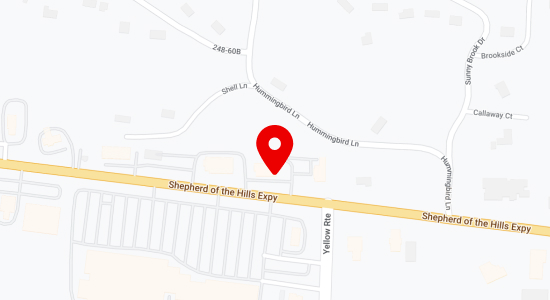
Please note that our law firm's address is for mail correspondence only. We do not accept in-office visits to this location. To schedule an appointment or consult with an attorney, please contact us via phone or email. Our contact information is readily available on our website. We look forward to hearing from you and strive to supply efficient and accessible legal services to our clients.
Branson, MO 65616