
Former Prosecutor
of 20 Years on
Your Side
of 20 Years on
Your Side







Mandatory minimum sentences can change the entire trajectory of a Missouri criminal case. When a mandatory minimum applies, the judge’s hands may be tied on the bottom end of the sentence. In some cases, it also restricts probation, parole eligibility, suspended imposition of sentence (SIS), or even whether a sentence must run consecutive to another sentence. That is why “How much time am I really looking at?” is not a simple question, and why early case planning matters.
Scrivner Law Firm represents people accused of crimes across Southwest Missouri, including Taney, Stone, and Christian Counties. Our founding attorney, Dayrell Scrivner, spent roughly two decades as a prosecutor and served as Chief Assistant Prosecutor for many years, giving him an insider’s understanding of how charging decisions are made and how the State positions cases for leverage at plea negotiations and sentencing.
A mandatory minimum is a sentencing rule that sets a minimum floor the court must impose if you are convicted of a particular charge, or if the State proves certain sentencing factors. In plain terms: even if a judge believes your background, your work history, your family obligations, and your rehabilitation efforts justify leniency, a mandatory minimum can still require incarceration or require a specific amount of time before you are eligible for release mechanisms like parole.
Mandatory minimums show up in a few different ways in Missouri and in federal constitutional case law:
Some laws require a specific minimum prison term (for example, “not less than three years”). Other laws do not require a fixed number of years, but they require a minimum portion of a sentence to be served before parole eligibility. Still others forbid probation, SIS, or other sentencing alternatives.
The most important point is that mandatory minimums often give prosecutors extra leverage. If the State can credibly threaten a mandatory minimum at trial, the pressure to plead can increase dramatically. A defense strategy built for a “normal” sentencing range may be the wrong strategy when mandatory minimum exposure is on the table.
Many people hear “mandatory minimum” and think it only applies to the most serious felonies. In reality, mandatory minimum exposure can be triggered by allegations about weapons, prior convictions, the classification of the offense, or how the State frames conduct in the charging document.
Mandatory minimum rules also shift where the battle is fought. Instead of only arguing about punishment at sentencing, the case may turn on earlier issues such as whether police lawfully obtained evidence, whether the State can prove an enhancement beyond a reasonable doubt, or whether a plea can be structured to avoid the triggering charge or sentencing factor.
In other words, mandatory minimum cases are often won or lost before sentencing.
Missouri felony sentencing ranges depend on the class of felony. As a general reference point, Missouri statutes set maximum ranges by class (for example, Class B felonies carry a different maximum than Class D felonies).
Mandatory minimums layer on top of those ranges. A statute might say an offense is punishable “not less than X years,” or it might require that a sentence be served consecutively to another sentence, or it might prohibit parole, probation, or suspended sentencing options for a period of time. The result is that the “paper range” does not tell the whole story. Real exposure depends on the charges filed, enhancements alleged, consecutive requirements, and parole eligibility restrictions.
This is also why a prosecutor’s charging decision is so important. Two cases with similar facts can have radically different sentencing outcomes if one is charged in a way that triggers a mandatory minimum and the other is not.
Mandatory minimum issues come up in many categories of cases. Below are some of the most common areas that can create minimum sentence floors or minimum time-served rules.
One of the most well known Missouri mandatory minimum schemes involves armed criminal action. Missouri’s armed criminal action statute provides for mandatory imprisonment ranges and includes parole and probation restrictions for specified periods. It also requires the armed criminal action punishment to be in addition to, and consecutive to, the sentence for the underlying felony.
This is one of the reasons weapons allegations can escalate risk so quickly. Even if the underlying charge has a sentencing range that sometimes allows probation, an armed criminal action count can impose a separate, consecutive sentence and restrict release eligibility.
From a defense standpoint, armed criminal action cases often hinge on careful factual analysis. “Use, assistance, or aid” language can be litigated. The relationship between the alleged weapon and the alleged felony matters. Evidence questions matter, too, because if the weapon evidence is suppressed, the mandatory minimum leverage can collapse.
Missouri law also contains “minimum prison term” provisions that can require an offender to serve a certain portion of a sentence before becoming eligible for parole, particularly where there are prior prison commitments.
These rules can surprise people because the judge may still impose a sentence within the statutory range, yet the actual time that must be served before parole eligibility can change significantly depending on criminal history and how the statute applies. This is a classic example of why it is not enough to ask, “What is the sentence range?” A realistic defense plan asks, “What is the earliest release eligibility in this specific scenario, and what assumptions does that depend on?”
DWI charges in Missouri are also an area where sentencing restrictions can become more severe with prior history, and the law can limit the court’s ability to use common alternatives like SIS for certain categories of offenders.
In practice, repeat offender DWI cases require a defense plan that is both evidence-focused and outcome-focused. That means challenging stop validity, field sobriety tests, and chemical testing issues while also keeping an eye on how the State is alleging prior offenses, how it plans to prove them, and what that proof would do to sentencing options if the case proceeds to conviction.
Drug trafficking statutes can carry extremely serious exposure, and mandatory minimum dynamics often appear either directly in the trafficking provisions or through minimum time-served rules and related enhancements. Missouri trafficking provisions are detailed and quantity-driven, and the classification can shift based on the alleged substance and quantity.
In trafficking cases, the defense often turns on the basics done exceptionally well: was the search lawful, was there a valid warrant or exception, can the State prove possession and knowledge, can it prove weight and lab integrity, and can it prove intent elements where required. When minimum sentencing consequences are tied to specific facts, every evidentiary detail becomes more consequential.
Mandatory minimums are not just a policy issue. They are also a constitutional procedure issue, because of how facts are found and who must find them.
In Apprendi v. New Jersey, the U.S. Supreme Court held that, as a general rule, any fact that increases the penalty for a crime beyond the statutory maximum must be submitted to a jury and proven beyond a reasonable doubt.
Later, in Alleyne v. United States, the Court extended that principle to mandatory minimums, holding that facts that increase the mandatory minimum are effectively elements that must be found by a jury beyond a reasonable doubt.
Why this matters in real cases: if the State is trying to trigger a mandatory minimum through a specific factual allegation, the defense should scrutinize whether that fact is being properly charged, whether it must be submitted to a jury, and whether the evidence truly supports it beyond a reasonable doubt. Sometimes the difference between a five-year minimum and a seven-year minimum comes down to a single disputed factual detail.
Missouri courts have also wrestled with mandatory minimum rules in specific contexts. For example, the Missouri Supreme Court addressed constitutional issues surrounding the armed criminal action mandatory minimum as applied to juveniles in State v. Smiley.
Cases like this highlight an important point: mandatory minimum statutes are not always “one size fits all” in constitutional analysis. The defense should consider whether there are age-based, proportionality, or other constitutional arguments that apply to the specific person and the specific charge.
Mandatory minimum disputes do not always end at sentencing. They can also show up later in litigation about parole eligibility calculations and how minimum eligibility terms are applied. For example, Missouri appellate courts have addressed disputes about how minimum parole eligibility terms interact with armed criminal action sentences.
From a practical standpoint, this is another reason careful record-building matters. When a sentencing consequence turns on how a judgment is written, how counts are structured, and whether sentences are consecutive or concurrent, defense counsel must protect the record so it is clear and legally accurate.
Mandatory minimums influence every stage of a case, including:
Charging decisions. A prosecutor may file a charge that triggers a mandatory minimum to create leverage, even if a lesser included offense is a plausible fit.
Bond conditions and negotiations. The perceived risk of a mandatory minimum can influence how the court and parties approach pretrial decisions.
Plea bargaining. Mandatory minimum exposure frequently becomes the central bargaining chip. A plea offer may be framed as “avoid the minimum” rather than “reduce the sentence.”
Trial strategy. When a minimum is tied to a specific factual finding, trial strategy often focuses on surgically attacking that fact, not just disputing the broader narrative.
A disciplined defense approach treats the mandatory minimum as a technical problem with technical solutions. That does not mean there is a “loophole.” It means understanding what, exactly, triggers the minimum and then testing whether the State can lawfully prove it using admissible evidence.
No two cases are identical, but strong defense work in mandatory minimum cases often centers on a few recurring themes.
If the evidence that supports the mandatory minimum trigger comes from an unlawful stop or search, suppression can change everything. For example, if the State’s mandatory minimum theory depends on a weapon found during a traffic stop, the legality of the stop, the scope of the search, and the basis for any detention extension may be case-defining.
That is why your lawyer should obtain and review body camera footage, dispatch logs, incident reports, warrant paperwork, and any audio-video evidence as early as possible. Suppression motions are not just procedural moves. In a mandatory minimum case, they can be the difference between prison and a sentencing option that keeps a person working and supporting their family.
Mandatory minimums are often triggered by a specific allegation, such as use of a weapon, a particular drug quantity, or a prior conviction category. The defense should identify that trigger early and build the case around it.
This can involve expert review, cross examination strategy, and pretrial motions. It can also involve negotiations that aim at charge modification. If the State’s proof on the trigger is weak, the defense should make that weakness costly, either at trial risk or in negotiations.
When minimum sentence consequences depend on a person being classified a certain way based on prior convictions, the State must prove those priors properly. That can involve certified records, identity proof, and sometimes legal questions about whether an out-of-state conviction qualifies as a Missouri equivalent.
Defense counsel should never accept enhancement allegations at face value. A single mistake in records, a mismatch in identity, or a legal classification issue can sometimes change the entire sentencing landscape.
Even when a minimum sentence applies, the defense should not treat sentencing as a formality. Many statutes impose a floor but leave the upper range open. A mandatory minimum of three years is very different from a sentence that climbs far above that minimum, particularly in cases with multiple counts or consecutive sentencing issues.
Effective sentencing advocacy includes presenting mitigating facts, treatment history, employment records, family responsibilities, military service where applicable, and a realistic plan for counseling or rehabilitation. The goal is to keep the sentence as close to the minimum as possible and to reduce collateral consequences where the law allows.
If you suspect a mandatory minimum might apply, take the situation seriously and act quickly.
First, do not try to talk your way out of it with law enforcement. Anything you say can become evidence, and in a mandatory minimum case, small details can have outsized consequences.
Second, preserve evidence. Save messages, receipts, location data, photos, and names of potential witnesses. Do not delete anything. Deleting can be misinterpreted and can create new legal problems.
Third, get a defense attorney involved early. Mandatory minimum cases are not the place for a wait-and-see approach. Early representation helps shape the narrative, identify suppression issues, and position the case for the best possible outcome before the case hardens into a trial posture.
Scrivner Law Firm is built around practical defense and real courtroom experience. Dayrell Scrivner has more than 30 years in the legal profession and spent about 20 years as a prosecutor, including many years overseeing day-to-day operations as Chief Assistant Prosecutor. That background helps him anticipate how the State will frame facts, which details it will emphasize, and how it will try to trigger the most serious sentencing consequences.
We serve clients throughout Missouri, including communities in Taney County, Stone County, and Christian County. If you are accused of a serious offense and mandatory minimum sentencing is a risk, we focus on early action: evidence review, motion practice, and negotiation backed by a readiness to litigate.
If you are facing charges where a mandatory minimum sentence might apply, you need a clear, case-specific explanation of what is truly at stake, and what can be done about it. Scrivner Law Firm is available to discuss your situation, explain how Missouri sentencing rules may apply, and begin building a defense strategy focused on protecting your freedom and your future. Call us or fill out our contact form at any time.
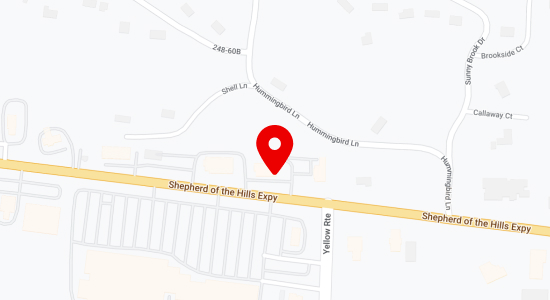
Please note that our law firm's address is for mail correspondence only. We do not accept in-office visits to this location. To schedule an appointment or consult with an attorney, please contact us via phone or email. Our contact information is readily available on our website. We look forward to hearing from you and strive to supply efficient and accessible legal services to our clients.
Branson, MO 65616