
Former Prosecutor
of 20 Years on
Your Side
of 20 Years on
Your Side







If you own firearms, hunt, carry for personal protection, or simply want the option to keep a gun in your home, a criminal case can raise a question that feels bigger than the case itself: Will I lose my gun rights?
The short answer is yes, you can lose your gun rights after a conviction, and sometimes after an order entered in court even without a conviction. The longer answer matters more, because the outcome depends on what you were convicted of, which court handled it, what your record looks like, and whether Missouri law, federal law, or both apply to your situation. Missouri and federal firearm rules overlap, but they are not identical, and the mistake people make is assuming that if a state case is “only a misdemeanor,” or if a sentence is “already done,” the firearm consequences end there. In many cases, the gun consequences are what linger the longest.
Scrivner Law Firm is led by Dayrell L. Scrivner, a former prosecutor with decades of experience and deep familiarity with the courts in Taney, Stone, and Christian Counties. Mr. Scrivner handled a wide range of cases as a prosecutor, including domestic violence, child abuse, and drug offenses, and later served for years as Chief Assistant Prosecutor. He now brings that prosecutorial insight to defense strategy for people who want to protect their record, their freedom, and their rights.
Gun rights can be restricted in two main ways.
First, Missouri can make it a new crime for certain people to possess a firearm. Second, federal law can make it a federal crime to possess or receive a firearm, and it can also block firearm purchases through the background check system. Those layers can apply at the same time.
A conviction is the most common trigger, but it is not the only one. A court order in a domestic violence case, for example, can create a firearm prohibition even before a criminal case is finished. That is one reason it is risky to treat a case as “not that serious” just because it is not a felony.
In Missouri, the starting point is the statute that criminalizes firearm possession by certain persons. Section 571.070 makes it unlawful for a person to knowingly possess a firearm if the person has been convicted of a felony, or if the person is a fugitive, habitually intoxicated or drugged, or currently adjudged mentally incompetent. The offense is generally a Class C felony, but it can be enhanced to a Class B felony in some situations, including when the person has a prior unlawful possession conviction or a “dangerous felony” history. The statute also contains an antique firearm exception for the felony conviction subsection.
What this means in real life is straightforward: if you have a felony conviction that qualifies under Missouri law, possessing a firearm can turn into a new felony case even if the original conviction is years old and even if you believe you are living a stable, law abiding life now.
Missouri firearm restrictions for felons have been litigated heavily, especially after Missouri voters amended the state constitution’s right to bear arms language.
Missouri appellate courts have repeatedly upheld Section 571.070 against constitutional challenges. In State v. Merritt and State v. McCoy, the Missouri Supreme Court addressed the statute under strict scrutiny analysis and upheld the restriction as narrowly tailored to serve the compelling interest of public safety and reducing firearm related crime.
In State v. Clay, the Missouri Supreme Court specifically rejected the argument that Missouri’s constitutional language prevents the legislature from restricting firearm possession by nonviolent felons. The Court reversed a trial court dismissal and held the statutory bar is valid, even as applied to nonviolent felons.
Missouri courts have also addressed related issues such as ex post facto arguments and as applied challenges. The statutory annotations on the Missouri Revisor page reference State v. Harris (ex post facto challenge rejected), and Alpert v. State (as applied Second Amendment challenge rejected on the facts of that case).
The takeaway is not that every gun rights argument is doomed. The takeaway is that Missouri takes prohibited possession seriously, and the legal terrain is not friendly to people who decide to “chance it” because they assume no one will care about an old case.
Federal law has its own list of “prohibited persons.” If you fall into one of those categories, possessing a firearm or ammunition can be a federal felony. Federal restrictions can also prevent you from purchasing or receiving firearms, even if Missouri law looks less restrictive in a particular scenario.
The Bureau of Alcohol, Tobacco, Firearms and Explosives summarizes these prohibited person categories under 18 U.S.C. § 922(g).
Rather than bury you in a long list, it helps to focus on the federal categories that most often surprise people after a criminal case:
If your case involves allegations like domestic violence, stalking, weapons conduct, or drugs, the gun rights consequences often become a major part of defense planning, because the cost of “pleading it down” can be permanent.
Gun rights after a conviction is not only about statutes. Courts interpret how those statutes apply, what the government must prove, and how constitutional challenges should be analyzed.
Modern Second Amendment litigation often starts with District of Columbia v. Heller (individual right to keep and bear arms) and McDonald v. Chicago (applying that right to the states). Then New York State Rifle & Pistol Association v. Bruen reshaped the analysis by emphasizing historical tradition.
After Bruen, many defendants challenged firearm prohibitions, including prohibited person statutes. In Rahimi, the Supreme Court upheld § 922(g)(8) and explained that firearm restrictions can be constitutional when they are consistent with the nation’s tradition of firearm regulation, particularly where the restriction aims to mitigate demonstrated threats of physical violence.
If you are charged federally under § 922(g), Rehaif v. United States is often a key case. The Supreme Court held that in a prosecution under § 922(g) and § 924(a)(2), the government must prove the defendant knew they possessed the firearm and also knew they belonged to the relevant prohibited status category.
Rehaif does not automatically dismiss gun cases. But it can change how a defense is built, especially where the alleged prohibited status is complicated, unclear, or based on old records.
Courts continue to wrestle with as applied challenges to § 922(g)(1), especially for older, nonviolent convictions. One of the most discussed modern cases is Range v. Attorney General in the Third Circuit, which has gone through multiple rounds, including reconsideration after Rahimi.
This matters for two reasons. First, it shows the law is evolving. Second, it shows why individualized analysis matters: “felon” is not a single category in real life, and courts are actively debating where historical tradition draws the line.
Sometimes yes, sometimes no. It depends on the type of misdemeanor and what exactly you pled to.
Many Missouri misdemeanors do not create a Missouri state law firearm prohibition by themselves the way a felony does under § 571.070. But a misdemeanor can still create a federal prohibition, and that is where people get burned.
The most common example is a domestic violence related plea. A person may think they resolved a case with “just a misdemeanor,” only to learn later that the conviction qualifies as a misdemeanor crime of domestic violence under federal law, creating a federal firearm ban. The details that matter include the relationship between the parties and whether the offense has an element involving the use or attempted use of physical force, or the threatened use of a deadly weapon, as federal law defines the concept.
This is why, in many domestic violence cases, the firearm consequences should be analyzed before any plea is entered, not after.
The good news is that losing gun rights is not always forever. The hard news is that restoration is technical, and the route that works for one person can fail for another because of the difference between state and federal definitions.
Federal law contains an important carve out. Under 18 U.S.C. § 921(a)(20), certain convictions are not treated as disqualifying for federal purposes if they have been expunged, set aside, pardoned, or if civil rights have been restored, unless the restoration expressly limits firearm rights.
The Department of Justice has long recognized that in § 922(g)(1) cases involving state convictions, courts look to the law of the convicting state to decide whether civil rights were restored and whether the firearm restriction remains.
Missouri has an expungement process under § 610.140.
There has been litigation about whether a Missouri expungement restores firearm rights for federal purposes. At least one Missouri federal court ruling in 2023 has been widely discussed for concluding that Missouri’s expungement statute restores firearm possession rights in a way that the federal system must recognize.
That said, expungement eligibility is limited, the process is paperwork heavy, and timing rules apply. Also, not all convictions qualify, and federal and state systems do not always interpret relief the way a person expects. In other words, expungement can be a path, but it is not a shortcut.
A pardon is another mechanism that may restore rights, and Missouri residents sometimes pursue restoration through executive clemency pathways. Comprehensive restoration overviews note that pardons can restore firearm rights under state and federal law, and that expungement can also restore firearm rights if the conviction is eligible for relief.
Because the consequences are high, this is an area where people should avoid do it yourself assumptions. The question is not just “Can I expunge it?” The question is “Will the relief I obtain actually remove the firearm disability under the law that applies to me?”
Completing a sentence does not automatically restore firearm rights. Many firearm prohibitions are based on conviction status, not current supervision status.
A misdemeanor can still be disqualifying under federal law, especially in domestic violence contexts. The title of the offense is not the whole story. The elements and the relationship context can matter.
Possessing, receiving, and purchasing are separate issues. Some people learn they are prohibited when a background check is denied. Others learn it when they are found in possession during a traffic stop, a hunting related contact, or a police response to an unrelated call.
Possession can be actual or constructive, and guns in a shared home can create risk if law enforcement believes a prohibited person has access or control. This issue comes up frequently in families trying to manage safety and property while a case is pending.
Gun rights consequences are not something you want to discover after a plea, after sentencing, or after a new arrest. They should be evaluated early, while options still exist.
A former prosecutor understands how charging decisions are made, what facts officers are trained to document, and which plea language can create collateral consequences later. Dayrell Scrivner spent about two decades as a prosecutor and served as Chief Assistant Prosecutor for many years, handling and supervising cases that often intersect with firearm prohibitions, including domestic violence and drug allegations.
That experience helps when the goal is not only to resolve the current case, but also to protect what comes after: employment, housing, licensing, and the ability to lawfully possess firearms.
If you are facing a felony charge, a domestic violence allegation, a protection order, or any case where firearms are part of your daily life, it is worth getting clear answers early. The rules are unforgiving, and waiting can remove options.
Scrivner Law Firm represents clients in Taney, Stone, and Christian Counties, with a focus on criminal defense built on local court knowledge and decades of prosecutorial insight.
If you want an honest assessment of whether a conviction could cost you your gun rights, and what can be done to reduce that risk, contact Scrivner Law Firm to discuss your situation confidentially.
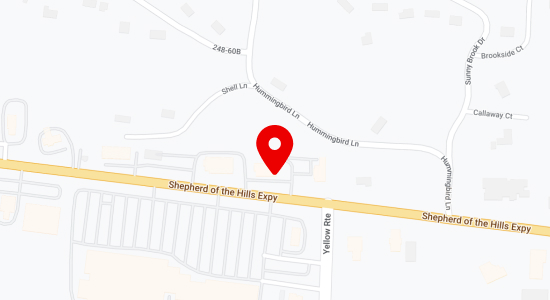
Please note that our law firm's address is for mail correspondence only. We do not accept in-office visits to this location. To schedule an appointment or consult with an attorney, please contact us via phone or email. Our contact information is readily available on our website. We look forward to hearing from you and strive to supply efficient and accessible legal services to our clients.
Branson, MO 65616